
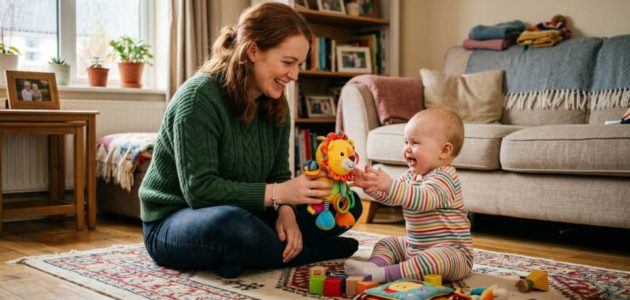
Your Baby's Six to Twelve Month Milestones: A Simple Guide for Parents
The second half of your baby’s first year is such a remarkable time. In just a few short months, the tiny newborn who once slept in your arms will be sitting up, babbling away, and possibly pulling themselves up on the furniture while you hold your breath nearby. It’s wonderful, exhausting, and goes by in a flash.
Whether you’re a first-time parent or you’ve been here before, it’s natural to wonder how your baby is getting on and what you can expect next. This guide walks you through the key developmental milestones you might see between six and twelve months — covering everything from physical skills and communication to feeding and emotional development.
Remember, every baby grows at their own pace. These milestones are a general guide, not a strict timeline. Some babies will reach certain skills earlier, others a little later, and both can be perfectly normal.
Physical Development: Getting Moving
The six-to-twelve-month stage is when babies typically go from relatively stationary little people to surprisingly fast-moving ones. It can feel like one week they’re happily sitting on a mat, and the next they’re halfway across the kitchen.
Here’s what to look out for in terms of physical milestones during this period:
-
Sitting with support (around 6 months): Most babies can sit with a little support around the six-month mark. You might still want to pop a cushion behind them just in case.
-
Sitting independently (around 7–8 months): By seven or eight months, many babies can sit without help and will use their hands to steady themselves if they wobble.
-
Rolling and commando crawling (6–9 months): Some babies roll their way around the room; others do a belly-crawl or shuffle. All of these are completely valid forms of getting from A to B.
-
Crawling on all fours (around 9 months): Classic hands-and-knees crawling usually appears around nine months, though not all babies go through this stage — some skip straight to standing and cruising.
-
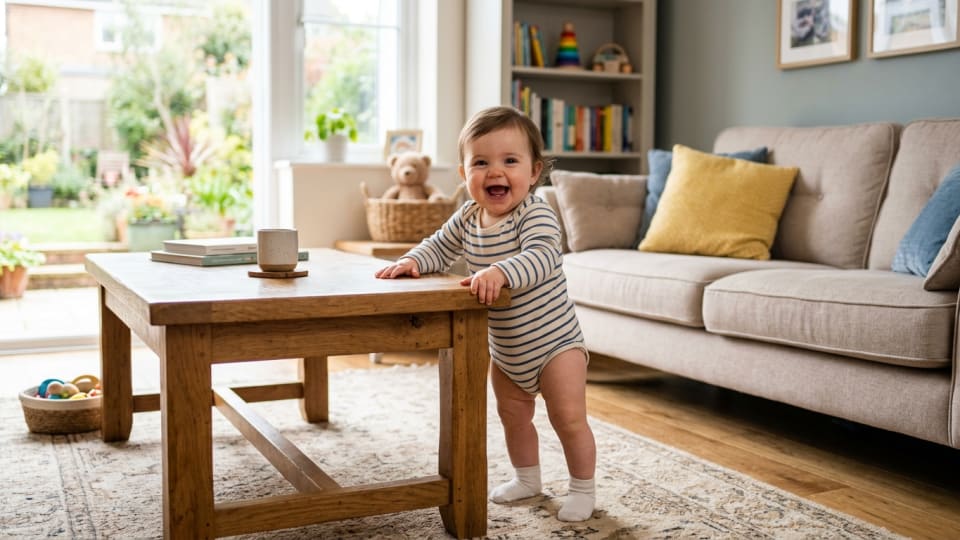
Pulling to stand and cruising (9–12 months): Your baby will start pulling themselves up using furniture and may begin “cruising” — walking sideways while holding on.
-
First steps (around 12 months, sometimes later): Some babies take their first independent steps just before or around their first birthday. Others wait until fourteen or even sixteen months, and that’s perfectly normal too.
This is also the time to start thinking about baby-proofing if you haven’t already. Once they’re mobile, they move fast — and they’re drawn to anything they shouldn’t have, almost magnetically.
Hand and Finger Skills
Alongside the big physical milestones, your baby is also developing impressive fine motor skills during these months. Watch out for:
-
Passing objects between hands (around 6–7 months)
-
Banging objects together (great fun, less great for your ears)
-
The pincer grip — using their thumb and forefinger to pick up small things — usually appears between 9 and 12 months. This is a big one for self-feeding too.
-
Pointing at things that interest them, which usually starts appearing around 9–12 months
These small skills are a really important part of their overall development and will support everything from eating to learning further down the line.
Communication: From Babbles to First Words
This stage is when things start to get really chatty. Your baby has been listening to you since before they were born, and now they’re starting to experiment with sounds and communication in earnest.
Here’s what you might notice:
-
Babbling with consonants (around 6–7 months): Sounds like “ba-ba”, “da-da”, and “ma-ma” start to appear, though your baby isn’t necessarily connecting these to you just yet.
-
Varied babbling and intonation (7–9 months): Babbling becomes more varied and starts to sound more like speech, with different tones and rhythms. Some babies sound like they’re having full conversations.
-
Understanding simple words (around 9 months): Babies begin to understand words like “no”, their own name, and familiar phrases like “up” or “bye-bye” before they can say them.
-
First real words (around 10–12 months): Many babies say their first recognisable word somewhere between ten and fourteen months. Common first words include “mama”, “dada”, “ball”, or “no”.
The best thing you can do to support your baby’s language development is simply to talk to them — narrate what you’re doing, read books together, sing songs, and respond when they babble. They’re taking it all in, even when it doesn’t look like it.
Social and Emotional Development
This is one of the most fascinating — and sometimes challenging — areas of development during these months. Your baby is becoming much more aware of the world around them, the people in it, and how they feel about all of it.
Some key social and emotional milestones to look out for include:
-
Stranger anxiety (around 6–9 months): Your sociable, smiley baby may suddenly become clingy with familiar people and wary of anyone they don’t know well. This is completely normal and a sign of healthy attachment.
-
Separation anxiety (around 8–10 months): Many babies start to get upset when a parent leaves the room. It can be hard on parents, but it means your baby knows you’re their safe person.
-
Waving bye-bye (around 9–10 months): A real milestone moment. Your baby may start waving in response to others, or even initiate it themselves.
-
Showing affection: Cuddles, open-mouthed kisses, and resting their head on you — these are your baby’s ways of saying they love you.
-
Playing simple games (9–12 months): Peekaboo, clapping games, and “so big” are big favourites at this age. Your baby will also start to understand cause and effect — bang the toy, it makes a noise; drop the spoon, someone picks it up (and then they drop it again).
-
Responding to their name: By around nine months, most babies will turn and look when you call their name.
Feeding Milestones: Starting Solids and Beyond
Introducing solids is one of the biggest changes of this whole stage, and it can feel both exciting and daunting in equal measure. The HSE recommends starting solid foods at around six months, not before seventeen weeks, and ideally not much later than six months.
Here’s a rough guide to what the feeding journey looks like from six to twelve months:
-
6 months: Starting to explore purées or soft mashed foods. Breast milk or formula remains the main source of nutrition.
-
6–8 months: Gradually introducing a wider variety of textures and tastes — vegetables, fruit, meat, fish, eggs. Some parents opt for baby-led weaning, others prefer purées, and many do a combination of both.
-
8–10 months: Moving towards lumpier textures and soft finger foods. Your baby is building their chewing skills even before all their teeth arrive.
-
10–12 months: Most babies this age can eat a modified version of the family meal. Three small meals a day alongside milk feeds is a typical pattern.
-
Around 12 months: You can introduce full-fat cow’s milk as a main drink (it shouldn’t replace breast milk or formula before this age).
Mealtimes can be messy, fun, frustrating, and hilarious all at once. If your baby refuses something, keep offering it in a relaxed way — it can take many, many tries before a new food is accepted, and that’s completely normal.
Sleep During This Stage
Sleep during the six-to-twelve-month period can be… unpredictable. Many parents find just as they think they’ve cracked it, a developmental leap, new tooth, or bit of separation anxiety turns things upside down again.
Generally, babies this age need around 12–16 hours of sleep in a 24-hour period, including naps. Most will have two naps a day — a shorter morning one and a longer one around midday — though this varies widely. Night waking is still very common and normal at this age, even if it doesn’t always feel that way at 3am.
If sleep is a real struggle in your household, you’re far from alone. It might be worth a chat with your public health nurse for advice that suits your baby and your family.
When to Have a Chat With Your Public Health Nurse
While every baby develops at their own pace, there are some things worth mentioning to your public health nurse or GP. Consider getting in touch if your baby:
-
Isn’t babbling at all by nine months
-
Doesn’t respond to their name by nine to twelve months
-
Isn’t making eye contact or smiling back at you
-
Seems very stiff or very floppy in their movements
-
Isn’t bearing any weight on their legs when supported by twelve months
-
Has lost skills they previously had — this always warrants a conversation
It’s always okay to raise a concern, no matter how small it might seem. Your public health nurse is there to support you as well as your baby, and early support is always a good thing if it’s needed.
A Final Word: Trust Yourself
Milestones are a guide, not a checklist. They’re not a test your baby needs to pass, and they’re certainly not a reflection of your parenting. Some babies talk early and walk late. Some skip crawling entirely. Some are cautious and take their time; others barrel headfirst into every new skill.
You know your baby better than anyone. If something feels off, trust your instincts and reach out to your public health nurse or GP. And if everything feels like it’s going well — enjoy it. This stage, with all its babbling and bouncing and first tastes and big personality moments, is one to treasure.