
Your Baby's Six to Twelve Month Milestones: A Guide for Parents
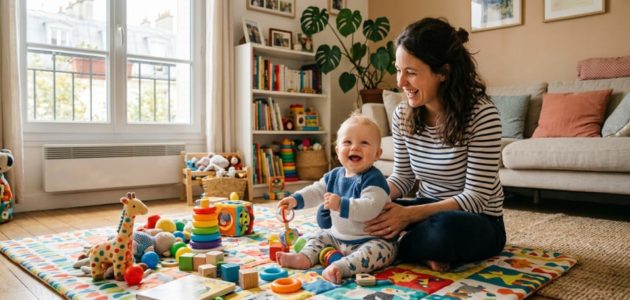
The second half of your baby’s first year is nothing short of remarkable. In just a few short months, your little one will go from a baby who mostly lies on their back to a curious, babbling, possibly-crawling small person with a very definite personality of their own. It’s an exciting — and sometimes exhausting — time.
Every baby grows at their own pace, and that’s completely normal. But having a general sense of what to expect between six and twelve months can be really reassuring. It helps you celebrate the small wins, notice if something might need a closer look, and simply enjoy watching your baby discover the world around them.
Here’s a gentle, practical guide to the key milestones your baby may reach during this wonderful stage.
Physical Development: Getting Moving
Between six and twelve months, your baby will go through some of the biggest physical changes of their first year. At around six months, many babies can sit with a little support, and by seven or eight months, a lot of them are sitting independently — hands free, taking in their surroundings with great curiosity.
Crawling often begins somewhere between seven and ten months, though it looks different for every baby. Some babies do a classic hands-and-knees crawl; others shuffle on their bottoms, roll their way across the room, or go straight to pulling themselves up to stand without ever really crawling at all. All of these are perfectly normal ways of getting around.
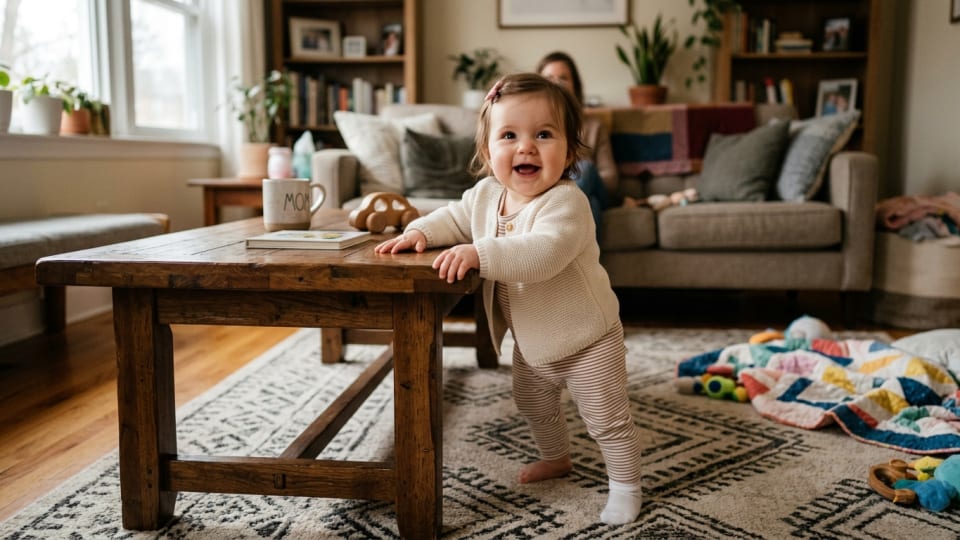
Pulling up to stand usually starts around nine to ten months. You may notice your baby using the sofa, your legs, or the coffee table as a support to haul themselves upright — and looking absolutely delighted with themselves for doing it. Cruising (walking along furniture while holding on) often follows shortly after, and some babies take their first independent steps before their first birthday, though many don’t, and that’s completely fine too.
It’s also worth noting that tummy time throughout these months continues to help build the core strength your baby needs for all of this movement. If your baby still isn’t keen on tummy time, short, playful sessions with toys just out of reach can help encourage them.
Some other physical milestones to watch for during this period include:
-
Passing objects from one hand to the other (around six to seven months)
-
Using a pincer grip — picking up small things between thumb and forefinger (around nine to ten months)
-
Banging objects together and exploring things by putting them in their mouth
-
Pointing at things that interest them (often around nine to twelve months)
Communication: From Babbles to First Words
This is the stage where babies really start to find their voice — and many parents find it magical to watch. At around six months, your baby may be making a range of vowel sounds and experimenting with volume (sometimes very enthusiastically). By seven or eight months, babbling often becomes more varied, with consonant sounds like “ba,” “da,” “ma,” and “ga” starting to appear.
By nine to ten months, many babies are putting sounds together — “bababa,” “mamama,” “dadada” — and starting to understand that certain sounds have meaning. They may begin to respond to their own name, turn when you call them, and look toward familiar voices.
First words — real, intentional ones — can arrive anywhere from around ten months onwards, though for many babies it’s closer to twelve months or even a little later. “Mama,” “dada,” and simple words like “bye” or “no” are often among the first. At this stage, understanding often comes before speaking, so your baby may clearly understand “where’s the dog?” or “wave bye-bye” before they can say a word themselves.
You can support your baby’s communication development by:
-
Talking to them throughout the day — narrating what you’re doing, naming objects, describing what you see
-
Reading books together, even simple board books with bright pictures
-
Singing songs and rhymes (these are brilliant for language development)
-
Responding enthusiastically when they babble — it teaches them that communication is a two-way thing
Social and Emotional Development: Big Feelings in a Small Person
Between six and twelve months, your baby becomes much more socially aware — and much more emotionally expressive. They will start to show clear preferences for familiar people, especially their primary caregivers, and this is completely healthy and natural.
Separation anxiety — that heart-wrenching crying when you leave the room or hand them to someone else — often begins around eight to ten months. It can be tough on parents, particularly those returning to work around this time, but it’s actually a really positive sign. It means your baby has formed a secure attachment to you, which is exactly what you want.
Other social and emotional milestones during this stage include:
-
Smiling and laughing in response to familiar faces and voices
-
Showing wariness or shyness around strangers (this is very common from around six months onwards)
-
Waving bye-bye (often from around nine to ten months)
-
Playing simple games like peekaboo and enjoying the back-and-forth of it
-
Showing affection — reaching for you, snuggling in, or patting your face
-
Beginning to show frustration when something is taken away or doesn’t go the way they wanted
This period is also when many babies start to imitate actions and expressions. If you stick out your tongue, they may stick theirs out too. If you clap your hands, they might try to copy. This imitation is a really important part of learning, so plenty of playful, face-to-face interaction is wonderful at this age.
Feeding Milestones: Starting Solids and Beyond
One of the biggest milestones of this stage is the introduction of solid foods, which is recommended from around six months by the HSE and health professionals here in Ireland. Starting solids is both exciting and a little daunting for many parents — and it’s completely normal to have questions about where to begin.
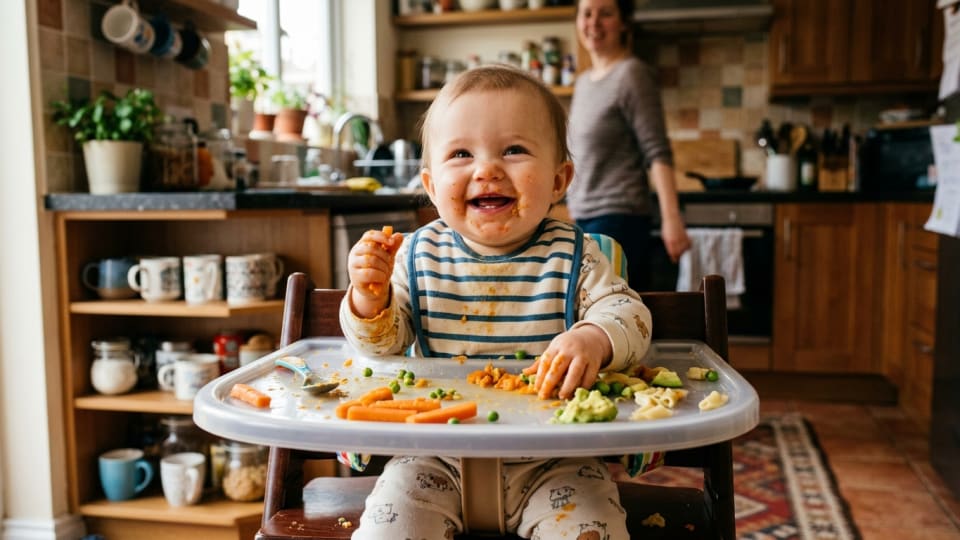
At six months, most babies are ready to start with smooth purées or soft mashed foods, as well as soft finger foods if you’re trying a baby-led weaning approach, or a combination of both. Good starting foods include pureed vegetables, soft fruits, baby rice, and well-cooked, mashed family foods.
As the months go on, the textures can gradually become lumpier and more varied. By around nine to ten months, many babies are managing soft cooked pieces, small pasta shapes, and a wider range of tastes. By twelve months, many babies are largely eating the same meals as the rest of the family, just in smaller portions and with softer textures.
A few helpful feeding milestones to watch for:
-
Showing interest in food you’re eating (a good readiness sign at six months)
-
Sitting upright with head control (important before starting solids)
-
Moving from smooth purées to mashed and minced textures
-
Drinking water from a sippy cup or open cup (from around six months)
-
Self-feeding with fingers (from around eight to nine months)
-
Beginning to use a spoon with help (often around ten to twelve months)
Breast milk or infant formula remains an important part of your baby’s diet throughout the first year, even as solid foods become more established. If you have any questions or concerns about weaning, your public health nurse or GP is always a good first port of call.
When to Chat to Your Public Health Nurse or GP
Most developmental variation is completely normal, and babies often have bursts of progress followed by quieter periods. However, there are some signs that are worth mentioning to your public health nurse or GP, just so they can offer reassurance or support if needed.
It may be worth having a chat if, by around nine to twelve months, your baby:
-
Isn’t babbling or making a variety of sounds
-
Doesn’t respond to their name being called
-
Doesn’t make eye contact or smile back at familiar faces
-
Isn’t showing any interest in moving or bearing weight on their legs when supported
-
Has lost skills they previously had
Your baby will have developmental checks with their public health nurse during this period — these are a great opportunity to raise any questions you have, no matter how small they might seem. There are no silly questions when it comes to your child’s development.
A Final Word: Milestones Are a Guide, Not a Checklist
It can be tempting — especially with social media full of babies doing incredible things — to compare your little one to others the same age. But the truth is, there’s a wide range of what’s perfectly normal, and babies have their own timelines. Some babies walk at nine months; others aren’t interested until fifteen months. Some are chatting away at eleven months; others are much more physically focused first.
Use this guide as a helpful reference point, not a test to pass or fail. You know your baby better than anyone, and that instinct you have as their parent is worth trusting. Celebrate every little moment — the first time they wave, the day they finally sit up on their own, the hilarious face they make when they try a new food for the first time. This is one of the most joyful stages of the whole first year.
Enjoy every bit of it.