

Why Your Preschooler Falls Apart After School — And How to Help
You’ve just arrived at the preschool door, ready for that lovely moment when your little one spots you and comes running. And then — within minutes — it happens. The wobbling lip, the tears over nothing, the full-body meltdown because you cut their banana the wrong way. Sound familiar? If your preschooler seems to fall apart the moment they’re collected, you’re very far from alone. In fact, there’s a name for it: the “preschool volcano” effect. And here’s the reassuring part — it actually means you’re doing something right.
Why They Hold It Together All Day
Preschool, as wonderful as it is, asks a huge amount from small children. For three, four, and five-year-olds, a full session involves navigating friendships, following rules, managing noise and activity, sharing toys, and regulating their emotions — all without the comfort of their favourite person nearby. That takes an enormous amount of energy and emotional effort.
Many children manage to hold themselves together brilliantly while they’re there. They’re in “coping mode” — doing their best to fit in, follow along, and keep going. But once they see your face? That’s when the floodgates open. The safety of you — their parent, their safe base — signals that it’s finally okay to let it all out.
Child development experts describe this as “after-school restraint collapse,” and it’s completely normal behaviour in young children. The big feelings were always there, bubbling under the surface. They were just waiting for the right moment — and the right person — to release them with.
It’s Actually a Sign of Something Wonderful
As exhausting as it can feel at the end of a long day, those tears and tantrums at pick-up are a genuine sign that your child feels deeply secure with you. They trust you completely. They know — without needing to think about it — that you are a safe place where big feelings are okay. That’s not a problem. That’s attachment working exactly as it should.
Children who feel secure with their caregivers are far more able to express their emotions openly, which is actually a really healthy thing. The alternative — a child who bottles everything up — is far more concerning in the long run. So if your little one is saving their biggest emotions just for you, take a quiet moment to recognise that as a real gift of trust.
Simple Wind-Down Strategies That Really Help
Knowing why it happens is helpful, but knowing what to do about it is even better. The good news is that a few small changes to your after-preschool routine can make a real difference to how your child transitions from school mode back to home mode.
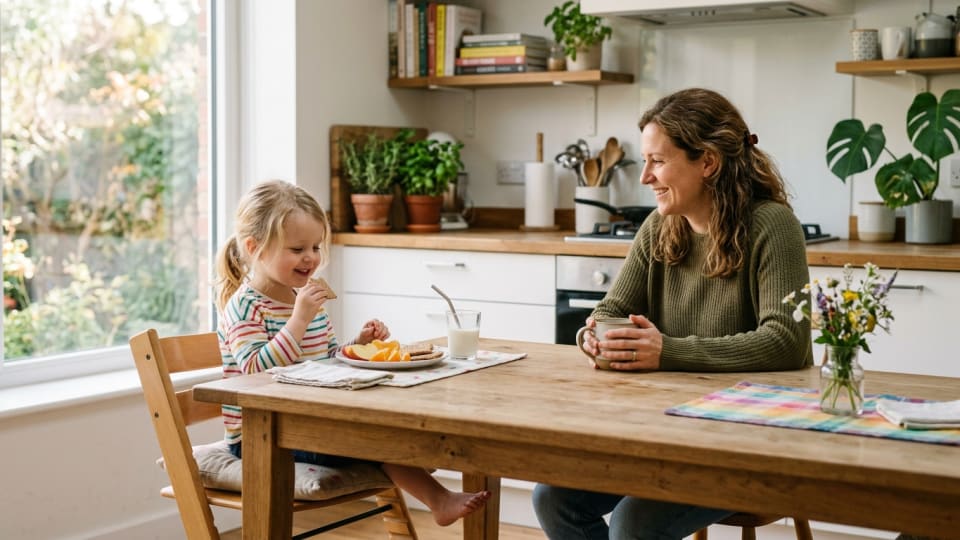
Offer a quiet snack straight away. Many children come out of preschool genuinely hungry and physically depleted. A small, calm snack — some fruit, a few crackers, a glass of milk — can do wonders for a wobbly mood. Try to sit with them while they eat rather than rushing straight into the next task.
Keep things low-key for the first 20–30 minutes. Resist the temptation to fill that time with errands, activities, or busyness. Your child has been “on” all day and needs to decompress. Some quiet time at home — colouring, a simple puzzle, or just pottering around — gives their nervous system a chance to settle.
Hold off on screens right away. It might seem like a helpful distraction, but screens can actually keep a child’s nervous system in a heightened state. A calm, low-stimulation environment is far more soothing after a busy preschool day.
Don’t bombard them with questions. “How was your day? What did you do? Who did you play with?” — it’s natural to want to know everything, but for a depleted little one, this can feel overwhelming. Try a gentle comment instead: “It’s lovely to see you. I missed you today.” Let them lead the conversation when they’re ready.
What to Say When the Big Feelings Hit
When the meltdown does arrive — and sometimes it will, no matter how well-prepared you are — the words you use can make a real difference. The goal is to acknowledge the feeling without adding fuel to the fire.
Some simple phrases that work well with preschoolers:
-
“I can see you’re having such a hard time right now. I’m right here.”
-
“It’s okay to feel upset. Big feelings are allowed.”
-
“You worked so hard today. Your body needs a rest.”
-
“I’ve got you. We can just sit here together for a bit.”
-
“Would you like a hug, or do you need some space?”
You don’t need to fix the feelings or make them stop. In fact, trying too hard to talk a child out of their emotions often makes things worse. Simply being present, calm, and warm is usually the most powerful thing you can do.
Looking After Yourself Too
Here’s something that doesn’t get said often enough: pick-up time is also the end of your day. Whether you’ve been at work, juggling other children, managing the house, or all of the above — you’re tired too. Staying calm and grounded when a small person is melting down in front of you is genuinely hard work, and it’s okay to acknowledge that.
A few things that can help you manage your own end-of-day energy:
-
Take a few slow, deep breaths before you walk into the preschool. It sounds small, but it genuinely helps to regulate your own nervous system before the handover happens.
-
Lower your own expectations for that first half hour at home. Nothing urgent needs to happen in those 20 minutes. Give yourself permission to just be present.
-
Try not to take the meltdown personally. Your child isn’t being bold or ungrateful. They’re small, exhausted, and overwhelmed — and they feel safe enough with you to show it.
-
If you feel yourself getting frustrated, it’s okay to say quietly: “Mammy needs a moment too.” Modelling your own emotional regulation is one of the most valuable things you can teach them.
When to Keep an Eye on Things
For most children, the after-preschool wobbles are a normal and temporary part of the day. However, if your child is regularly very distressed, frequently mentions not wanting to go to preschool, or seems anxious or withdrawn on an ongoing basis, it’s worth having a gentle chat with their key worker or teacher. Most of the time there’s a simple explanation — a change in the room, a friendship hiccup, or just a tricky patch — and it can be easily addressed together.
Trust your instincts. You know your child best, and a conversation with the preschool is always welcome and worthwhile if something feels off.
The Takeaway for Every Tired Mam
The next time your little one bursts into tears the moment they spot you at the gate, try to hold onto this: you are their safe place. Out of everyone in their world, you are the person they trust enough to fall apart with. That’s not a sign that something is wrong. It’s a sign that something is very, very right.
Be gentle with them in those first moments home. Be gentle with yourself too. Have a small snack, sit on the floor if you need to, and let the feelings move through. This phase won’t last forever — and your steady, loving presence is exactly what they need to get through it.