

Why summer might be the perfect time for potty training
If you’ve been wondering when to tackle potty training with your little one, you might want to consider the warmer months ahead. While every child develops at their own pace, summer can offer some genuine advantages that make this milestone a bit easier for both you and your toddler.
Many parents find that the combination of warmer weather, relaxed schedules, and fewer layers of clothing creates an ideal environment for potty training success. Here’s why summer might work in your favour—and how to know if your child is ready to take this important step.
The practical advantages of summer potty training
Summer brings several natural benefits that can make potty training less stressful for everyone involved. The most obvious advantage is the clothing factor—with fewer layers to manage, accidents become much easier to handle. There’s nothing worse than dealing with wet tights, thick jumpers, and winter coats when your toddler needs the toilet urgently.
The warmer weather also means outdoor play becomes a natural part of your routine. If accidents happen in the garden, cleanup is straightforward, and your child won’t feel as embarrassed about mishaps when they’re already outside playing.
Longer daylight hours work in your favour too. With more time for active play and consistent routines, you can establish regular toilet breaks without disrupting early bedtimes or dark winter evenings.
Signs your child might be ready
Regardless of the season, your toddler needs to show certain readiness signs before potty training will be successful. Most children are ready between 20 months and 3 years old, but every child develops differently.
Look for these key indicators: your child can walk steadily and climb onto a potty independently, they show interest in the toilet or want to watch you use it, they can communicate their needs with words or gestures, and they have longer periods with dry nappies.
Physical readiness is equally important. Can your child sit down and stand up without help? Do they show signs of independence in other areas, like feeding themselves or helping to get dressed?
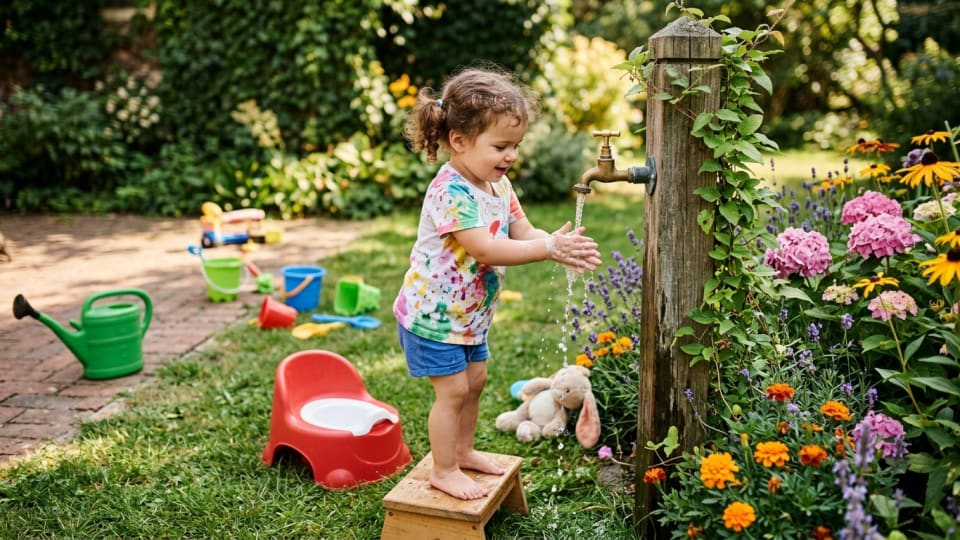
Summer-specific strategies that work
Take advantage of the season by creating positive associations with potty training. Let your child pick out special “big kid” summer underwear featuring their favourite characters or bright colours. This makes the transition feel exciting rather than daunting.
Consider starting with naked time in the garden if you have a private outdoor space. This helps children recognise their body’s signals without the barrier of a nappy, and accidents on grass are no big deal.
Use summer activities as natural toilet break opportunities. Before heading to the playground, after coming in from the garden, or before getting in the paddling pool—these become easy reminders that don’t feel forced.
Keeping it relaxed and pressure-free
Remember that potty training shouldn’t feel like a race. If your child seems resistant or stressed, it’s perfectly fine to take a break and try again in a few weeks. Summer’s relaxed atmosphere should extend to your approach—this isn’t about meeting arbitrary deadlines.
Many parents find that holiday periods work well because there’s less rushing around to childminders or preschool. You have more flexibility to respond to your child’s cues and establish routines at their pace.
Stock up on extra underwear and comfortable clothes that are easy to change. Keep cleaning supplies handy, but try to react to accidents calmly—your response will influence how your child feels about the learning process.
What to do if summer doesn’t work out
If you start potty training in summer but your child isn’t quite ready, don’t worry. You haven’t missed your only opportunity. Some children actually do better with the structure of autumn routines, and others need the motivation of wanting to be “grown up” for starting preschool.
The key is following your child’s lead rather than the calendar. If summer feels right for your family’s schedule and your toddler is showing readiness signs, it’s worth trying. But if it’s not working, you can always pause and revisit potty training when it feels more natural.
Trust your instincts as a parent—you know your child best. Summer simply offers some practical advantages that might make the journey a bit smoother for families who are ready to take this step together.