
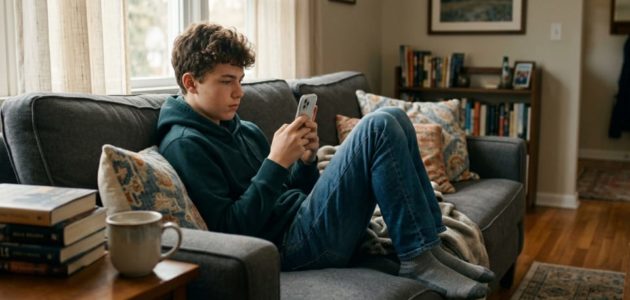
Three Quarters of Irish Adults Want a Social Media Ban for Under-16s
If you’ve ever found yourself confiscating a phone, setting screen-time limits you’re not entirely sure how to enforce, or quietly panicking about what your child is actually doing online — you are very much not alone. A new survey suggests that the vast majority of parents in Ireland feel exactly the same way, and most of them want something done about it.
New research from Irish telecoms provider Pure Telecom has found that 74% of adults in Ireland support a social media ban for under-16s. Among parents of children aged 16 and under, that figure rises to 80%. And among parents of six-to-eight-year-olds specifically, it jumps again to 88%. The results come as the UK this week announced plans to introduce a social media ban for that same age group — a move that has clearly got people talking on this side of the Irish Sea too.
The numbers tell a clear story
The research, conducted by Censuswide among 1,000 adults across the Republic of Ireland last month, is part of Pure Telecom’s Connected Lives 2026 survey exploring internet usage and trends in Ireland today. The headline findings are striking, but the picture beneath them is more nuanced than a simple yes or no.
Men are more likely than women to support a ban — 78% versus 69% — though both figures represent clear majority support. And while the appetite for a ban is strong, there’s genuine scepticism about whether one could ever actually work. A full 50% of adults believe it’s impossible to stop under-16s from accessing social media, regardless of any ban or parental controls put in place. Anyone who has watched a determined twelve-year-old navigate around a screen-time restriction would probably find that statistic entirely believable.
There’s also the question of who bears responsibility. Some 31% believe it ultimately rests with parents rather than Government — but a larger group, 39%, think parents need Government intervention to help them keep children safe. It isn’t really an either/or, and most families living this reality know that.
It’s not all doom and scroll
One of the more interesting findings is that 43% of adults acknowledge social media can be a positive outlet for some children. That’s worth sitting with. For teenagers who are LGBTQ+, who live in rural areas, who struggle socially at school, or who have niche interests they can’t easily explore locally, online communities can be genuinely meaningful. The debate isn’t simply “social media bad” — it’s considerably more complicated than that.
That complexity shows up clearly in the education findings too. Some 58% of adults believe schools should be teaching children how to use social media safely, and 44% think digital literacy education would be more effective than a blanket ban. Younger adults aged 18 to 24 are the least likely group to support an outright ban but the most likely to want social media safety taught in schools — which perhaps reflects a generation that grew up online and knows better than most that access isn’t going away.
Paul Connell, CEO of Pure Telecom, put it this way: “Our research shows that this is a topic that adults in Ireland care deeply about, but there are mixed opinions on whether an outright ban can be effective, or if it is enough on its own. 18- to 24-year-olds are the least likely age group to support a ban, but the most likely to advocate for social media safety to be taught in schools. Older adults, meanwhile, are more likely to support a ban and less likely to call for schools to be involved.”
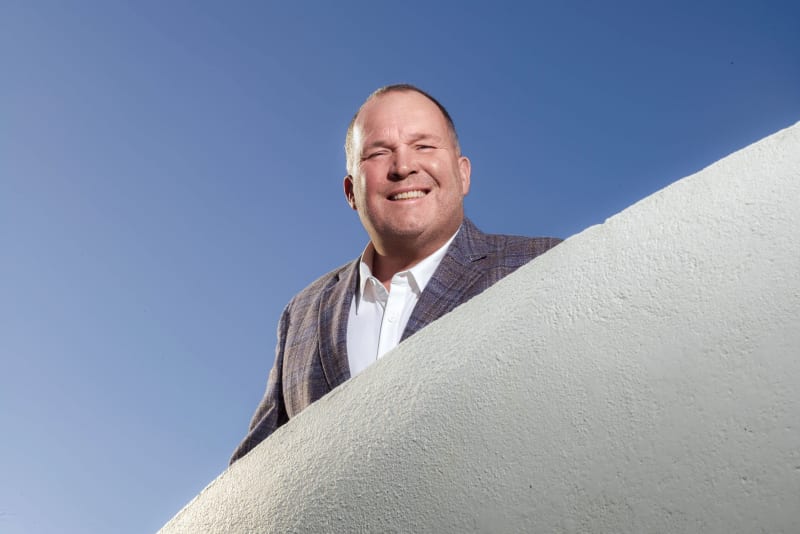
Paul Connell, CEO, Pure Telecom
He added: “Regardless of people individually, our research shows that a whole-society approach — which includes Government, teachers, parents and children — is the one that is preferred by the large majority.”
So where does that leave parents right now?
Legislation, if it comes, won’t arrive overnight. In the meantime, most parents are navigating this more or less alone — with varying degrees of success and zero judgment from us. The finding that 57% believe social media companies should be legally responsible for protecting children online reflects a very real frustration: that parents are being asked to hold a line that enormously powerful tech companies have no real incentive to help them hold.
Whether Ireland follows the UK’s lead on a formal ban remains to be seen. But the message from this research is clear: Irish parents want action, they want support, and they want the responsibility shared a lot more fairly than it currently is. That feels like a reasonable ask.
You can find out more about Pure Telecom’s Connected Lives research at puretelecom.ie.