
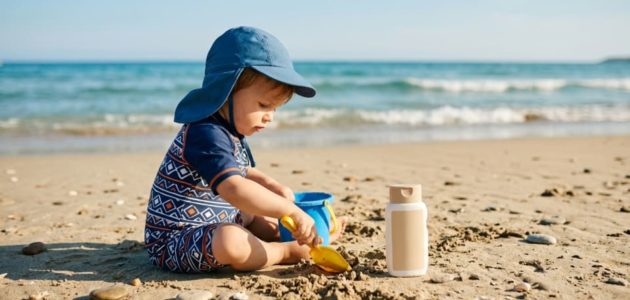
The one place parents keep forgetting to put sun cream on their kids
You’ve got the sun cream on their noses, their shoulders, the backs of their knees. You’ve wrestled the factor 50 onto wriggling arms and chased them around the garden with a bottle of spray. And yet there’s one spot you’ve almost certainly missed — the one sitting right on top of their heads.
With forecasters in the UK predicting temperatures of 27–29°C across the summer and potentially higher, a leading dermatologist is urging parents to pay closer attention to their children’s scalps. It’s one of the most UV-exposed parts of the body, and one of the most consistently forgotten.
Why the scalp is so vulnerable
Dr Conal Perrett, Consultant Dermatologist at The Devonshire Clinic, says he sees this issue time and again. Most parents do a brilliant job covering the obvious areas — faces, shoulders, arms — but the scalp rarely makes the list.
“The scalp is one of the most overlooked areas for sun protection, yet it’s particularly vulnerable,” Dr Perrett explains. “Many people assume their hair provides complete protection from UV radiation, but that’s simply not the case. Even children with thick hair can experience sunburn along their parting, around the crown or near the hairline.”
What makes it even trickier is that scalp sunburn doesn’t always announce itself straight away. One of the most common signs — flaking, peeling skin a few days after sun exposure — is frequently mistaken for dandruff.
“People are often unaware they’ve burned their scalp until it starts to peel,” says Dr Perrett. “At that stage, many assume they’re experiencing dandruff or a dry scalp when in reality the skin is shedding as part of the healing process following UV damage.”
Other symptoms to watch for include tenderness when brushing or washing hair, itching, redness along the hairline, warmth and sensitivity. In more serious cases, blistering, swelling and headaches can occur.
It’s not just about sunburn
The concern goes beyond a sore head after a day at the beach. Dr Perrett points out that repeated UV exposure on the scalp can contribute to premature skin ageing and, over time, increase the risk of skin cancer — including melanoma. Because the scalp is covered by hair, suspicious changes can go unnoticed for far longer than they might elsewhere on the body.
“People tend to check moles and skin changes on exposed areas of the body, but very few routinely examine their scalp. That can potentially delay diagnosis,” he says.
Sun exposure can also damage the hair itself. Prolonged UV exposure weakens the hair shaft, leading to dryness, brittleness and breakage. So protecting their scalp this summer is good for their hair too.
It’s also worth knowing that UV damage isn’t just a problem on scorching hot days. “UV damage is caused by ultraviolet radiation, not temperature,” Dr Perrett notes. “Even on cooler or cloudy days, UV levels can be high enough to damage exposed skin, including the scalp.” Relevant information for anyone living in a country where “grand stretch in the evening” can lull you into a false sense of security.
What to do if your child burns their scalp
The best approach, of course, is prevention — a wide-brimmed hat, a cap, or a UV-protective head covering goes a long way. But if your little one does end up with a sore scalp, here’s what Dr Perrett recommends:
-
Cool it down quickly. A cool shower or a cold damp flannel can help reduce heat and inflammation. Don’t apply ice directly to the skin.
-
Switch to gentle haircare products. Standard shampoos can sting on sunburned skin. Use fragrance-free, sulphate-free options while the scalp heals.
-
Skip the heat styling. Hair dryers and hot brushes can worsen inflammation. Let their hair air dry until things settle.
-
Don’t let them scratch or pick. Peeling is a normal part of healing. Picking at it delays recovery and raises the risk of infection.
-
Keep them hydrated. Sunburn draws fluid to the skin’s surface. Plenty of water and a soothing aloe vera gel or fragrance-free after-sun product can ease discomfort.
-
Keep them out of the sun while it heals. A burned scalp is even more vulnerable to further damage. Hats are non-negotiable until it’s fully recovered.
Most mild scalp sunburns improve within three to five days. But if your child develops blistering, significant swelling, severe pain, fever, chills, dizziness or nausea, it’s time to seek medical advice rather than wait it out.
“Scalp sunburn is often dismissed as a minor inconvenience, but severe burns can require medical assessment,” Dr Perrett says. “If symptoms are worsening rather than improving, it’s important to seek professional advice.”
So this summer, once you’ve done the nose and the shoulders and the backs of the knees — take an extra thirty seconds and sort out the top of their head too. It’s the easiest thing to forget and, it turns out, one of the most important not to.