

The No-Fuss After-School Routine That Actually Works
If you’re like most parents, the hours between school pick-up and bedtime can feel like a whirlwind of homework battles, activity drop-offs, and dinner prep chaos. The good news? You don’t need a military-precision schedule to create calmer, more connected after-school evenings.
Many families find that the key isn’t perfection—it’s having a flexible framework that can bend with the realities of family life. Here’s how to build an after-school routine that actually works for real families, complete with tired children, unexpected homework meltdowns, and the occasional forgotten PE kit.
Start With a Transition Ritual
The shift from school energy to home mode can be jarring for children. Creating a simple transition ritual helps everyone decompress and reset for the evening ahead.
This might look like:
-
A quick snack and chat about the day
-
Ten minutes of free play or quiet time
-
Changing into comfy clothes
-
Unpacking school bags together
The key is keeping it simple and consistent. Even five minutes of this ritual can make a significant difference to everyone’s mood and energy levels.
Create Homework Zones That Work
Not every family has a dedicated study room, and that’s perfectly fine. What matters is having a designated space where homework happens—whether that’s the kitchen table, a corner of the sitting room, or even a portable homework caddy that moves around the house.

Stock your homework zone with essentials: pencils, erasers, a timer, and any specific supplies your children need. Having everything in one place reduces the “I can’t find my…” drama that can derail homework time.
If you have multiple children, consider staggered homework times or separate spaces to reduce distractions and sibling squabbles.
Build in Buffer Time
Real life happens. The baby needs attention during homework time, someone forgot their lunch money, or there’s an unexpected school project deadline. Building buffer time into your routine means these moments don’t derail your entire evening.
Try scheduling activities with 15-20 minute gaps between them. This breathing room allows for the unexpected and reduces the stress of constantly rushing from one thing to the next.
Managing Multiple Children’s Schedules
Juggling different aged children with varying needs requires a bit of creative planning. Consider these strategies:
-
Use a family calendar visible to everyone
-
Batch similar activities (all homework time together, even if they’re doing different work)
-
Assign older children as “homework buddies” for younger ones
-
Create quiet activities for non-homework children during focused work time
Dinner Prep During Busy Hours
Preparing dinner while managing homework and activities feels overwhelming, but a few strategies can help. Slow cooker meals, batch cooking at weekends, and involving children in age-appropriate food prep can all ease the dinner rush.
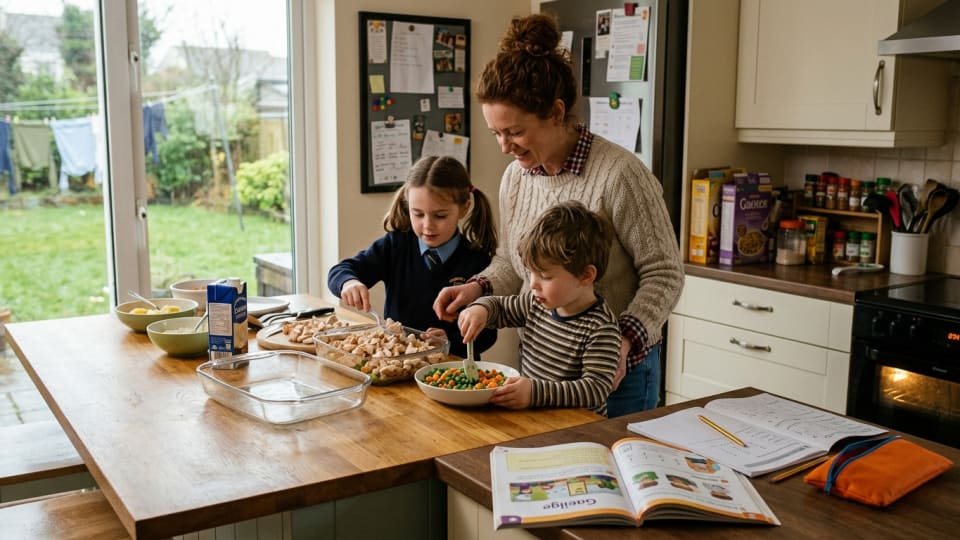
Consider preparing simple snacks that double as dinner prep—chopping vegetables for both after-school snacks and evening meals, for instance.
When Meltdowns Happen
Tired children and homework don’t always mix well. When meltdowns occur, remember that sometimes the kindest thing is to pause the routine.
A five-minute break, a cuddle, or even moving homework to after dinner might be exactly what your child needs. Flexibility in your routine isn’t failure—it’s responsive parenting.
Finding Your Family’s Rhythm
Every family’s needs are different. Some families thrive with homework immediately after school, others need downtime first. Some prefer activities clustered together, others spread throughout the week.
The “perfect” routine is simply the one that works for your family right now. And remember, what works in September might need adjusting by November—and that’s completely normal.
Start with small changes, involve your children in creating the routine, and give any new system at least two weeks before deciding if it’s working. Most importantly, be kind to yourself as you figure out what works best for your unique family.