

Spring Cleaning Made Easy: Get Your Kids Helping Instead of Hindering
Spring has sprung, and you know what that means – it’s time for the annual deep clean! But before you feel overwhelmed at the thought of tackling months of accumulated clutter while simultaneously keeping the kids entertained, take a breath. What if I told you that your little ones could actually be your greatest allies in this seasonal tradition?
As busy mums, we often feel like we’re juggling a million things at once. The temptation is real to wait until the kids are asleep or occupied elsewhere before diving into the cleaning frenzy. But here’s the thing – involving your children in spring cleaning isn’t just about getting extra hands on deck (though that’s definitely a bonus!). It’s about teaching them valuable life skills, creating lasting memories, and yes, actually making the whole process more enjoyable.
Let’s be honest – children are naturally drawn to mess-making, but they’re equally fascinated by the process of cleaning and organising. It’s all about channeling that curiosity in the right direction. Plus, there’s something quite magical about working together as a family team, music playing in the background, everyone with their own special job to do.
Create Age-Appropriate Task Lists That Actually Work
The key to successful family spring cleaning lies in matching tasks to your child’s developmental stage. Your three-year-old isn’t going to deep clean the bathroom (thank goodness!), but they absolutely can sort socks by colour or match up pairs of shoes.
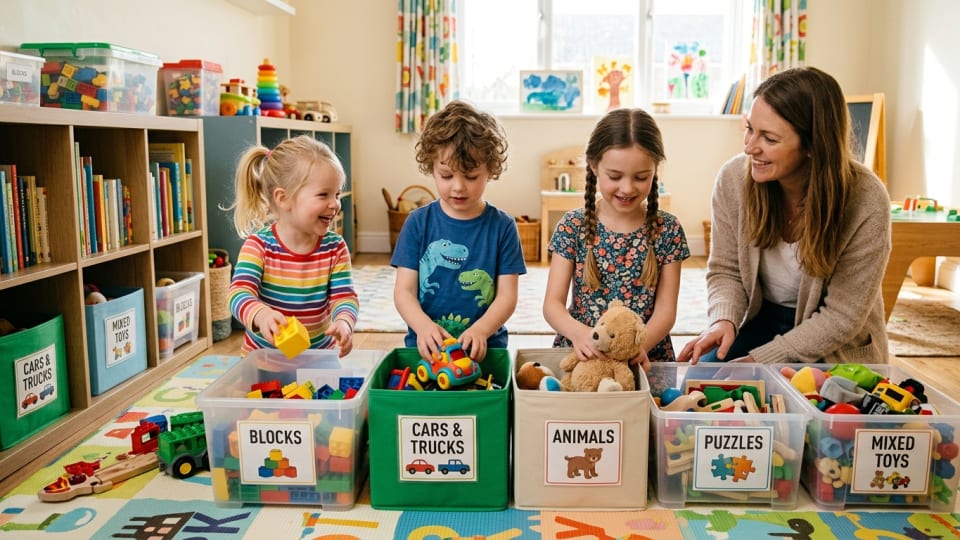
For toddlers (2-4 years), think simple sorting games. Give them a basket of mixed socks to pair up, or have them put all the toy cars in one box and all the dolls in another. They love the satisfaction of completion, and you’ll be amazed how focused they become when given a clear, manageable task.
Primary school children (5-10 years) can handle more responsibility. They can strip their own beds, sort books by size on shelves, or tackle their toy boxes with minimal supervision. This age group thrives on clear instructions and love the independence of having “their own” cleaning jobs.
Teenagers, well, they’re capable of so much more than they often let on! Give them ownership of their own spaces – their bedrooms, perhaps the family computer area, or even the entire downstairs loo. The trick with teens is treating them like the capable young adults they’re becoming, not micromanaging every move.
Turn Cleaning Into Games (Yes, Really!)
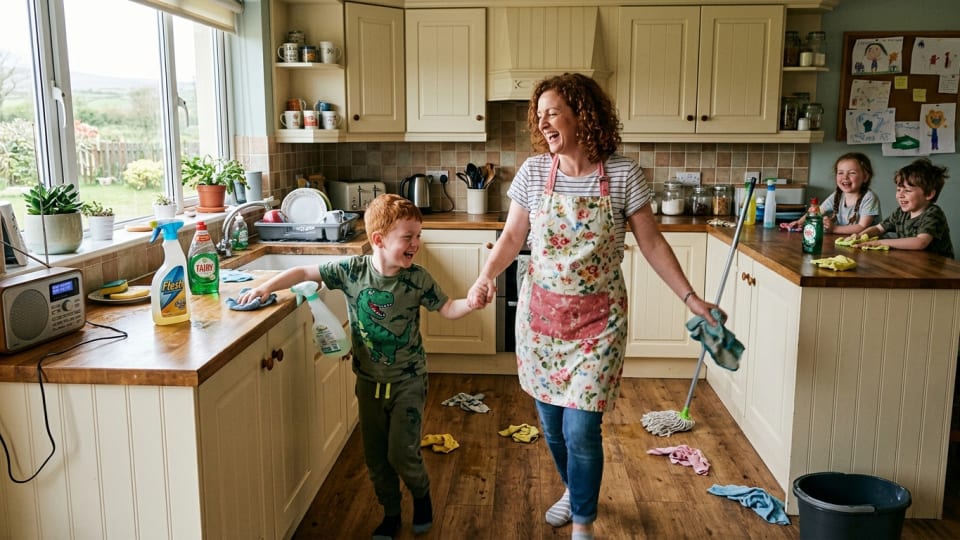
Who says cleaning can’t be fun? Some of my favourite family memories have been made while racing against the clock to see who could organise their assigned area fastest, or having dance parties while dusting the living room.
The “10-Minute Tidy” can be a game-changer. Set a timer, put on an upbeat playlist, and see how much everyone can accomplish before the buzzer goes off. The competitive element gets everyone moving, and you’d be surprised how much can be achieved in just ten focused minutes.
Another favourite is the “Treasure Hunt Clean-Up.” Give each child a list of items to find and put away – “Find 5 books that belong in the bookshelf,” “Discover 3 items that belong in the kitchen,” and so on. It transforms the mundane task of tidying into an exciting adventure.
Music Makes Everything Better
Never underestimate the power of a good playlist! Music transforms the entire atmosphere of cleaning day. Let the kids take turns choosing songs, and don’t be afraid to have impromptu dance breaks between tasks. Some of our best conversations happen while we’re all working away to our favourite tunes.
Create a “Spring Cleaning Soundtrack” together as a family. Include everyone’s favourite energetic songs – yes, even if that means “Baby Shark” makes an appearance alongside your preferred radio hits. The shared experience of singing along while working creates those precious bonding moments we’re all after.
Reward Systems That Motivate (Without Breaking the Bank)
Let’s talk about motivation. While we want our children to understand that contributing to household tasks is simply part of being a family member, a little incentive during spring cleaning season doesn’t hurt!
Create a simple reward chart where kids earn stickers or points for completed tasks. The rewards don’t need to be expensive – an extra bedtime story, choosing the family movie for Friday night, or a special one-on-one activity with mum or dad can be incredibly motivating.
Consider creating “Spring Cleaning Certificates” that you present at a special family dinner once all the work is done. Children love recognition, and having something tangible to show for their hard work makes the effort feel worthwhile.
Family rewards work brilliantly too. “When we finish spring cleaning the living areas, we’ll have a family picnic in the garden” gives everyone something collective to work towards.
Celebrate the Accomplishments Together
This might be the most important tip of all – don’t forget to celebrate! Once the work is done, take a moment to appreciate what you’ve achieved together as a family team. Walk through each room and point out specific contributions each child made. “Look how organised your book corner looks now, Sarah!” or “The way you sorted all those Lego pieces made such a difference, Michael!”
Consider taking before and after photos of your newly organised spaces. Kids love seeing the visual transformation, and it reinforces the value of their hard work. You might even create a little photo album of your “Spring Cleaning Success” to look back on.
End the day with something special – whether that’s ordering takeaway instead of cooking, having a family movie afternoon in your newly cleaned living room, or simply enjoying a cup of tea while the kids play happily in their organised spaces.
Remember, the goal isn’t perfection – it’s connection. Your house might not look like a magazine spread when you’re done, and that’s absolutely fine. What matters is that you’ve worked together, taught valuable life skills, and hopefully shared a few laughs along the way.
Spring cleaning doesn’t have to be a solo marathon of exhaustion. With a bit of creativity and the right approach, it can become one of those family traditions your children will remember fondly – and maybe even recreate with their own families someday. Now that’s magic worth making!