
Over half of Irish kids have zero screen time limits, new research reveals
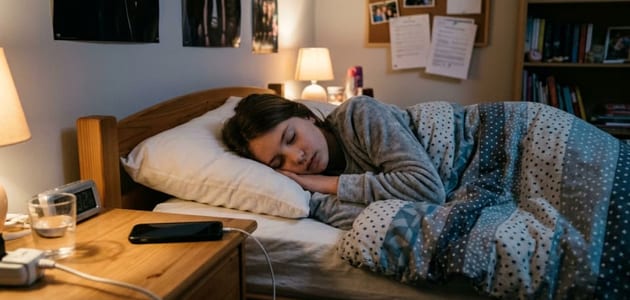
If your child falls asleep with their phone beside them every night, you’re far from alone. New research from Irish online safety charity CyberSafeKids has found that more than half of children aged 8 to 12 and more than two-thirds of those aged 12 to 15 have devices in their bedrooms overnight — and many are staying online until they physically can’t keep their eyes open anymore.
The figures, released this morning to mark the launch of CyberBreak 2026, make for uncomfortable reading. More than a third of primary school-age children (35% of 8–12-year-olds) have no time restrictions at all on their online activity. For secondary school kids, that rises to 67%. And with over 26,000 people already signed up, it’s clear this annual digital detox is striking a very real nerve with Irish families.
The numbers that stopped us in our tracks
The research, based on a survey of 1,274 young people carried out since September’s return to school, paints a picture of near-constant connectivity that starts before the school gates and ends — if it ends at all — sometime after lights out.
Children are online first thing in the morning (9% of 8–12-year-olds go online immediately after waking; that jumps to 23% for teens), again straight after school, and heavily in the evening — 69% of younger children and 82% of teens are online during evening hours. A fifth of younger children fall asleep with their devices, and more than a third of 12–15-year-olds do too.
Alex Cooney, CEO of CyberSafeKids, isn’t mincing her words: “Screens in bedrooms, especially overnight, affect not only sleep but overall wellbeing. Children need clear boundaries around device use at home, and the fact that many have no restrictions at all is alarming given the harmful content and contact inherent in digital environments.”
And here’s the part that stings a little: more than half of young people say their parents are on their phones either “a lot of the time” or “all the time” when they’re together. So if you’ve ever looked up from your screen to find your child staring back at you, this one’s for all of us.
What CyberBreak actually asks you to do
CyberBreak 2026, which is supported by the HSE, kicks off tonight at 7pm and runs for 24 hours — until 7pm on Saturday evening. The idea is simple: switch off smart devices, step away from social media, apps, gaming and non-essential messaging, and spend that time doing something a bit more human.
CyberSafeKids suggests things like going for a walk, baking together, playing board games, reading or visiting friends. You can make a phone call or watch a film — just one the whole family can sit down for together. And if a full 24 hours feels too ambitious right now, there’s a gentler option called a CyberByte: just from 7pm tonight to 7am tomorrow morning.
Family psychotherapist Dr Richard Hogan puts it simply: “As parents, we must lead by example — this means engaging with our kids before our phones in the morning and during the day, sending the vital message to them that they come first, not our smart devices.”
Brian Higgins of the HSE added: “Taking a CyberBreak gives us an opportunity to take a step back and address how we can find a healthy balance between our online and offline lives.”
Small changes that actually stick
Beyond this weekend, CyberSafeKids has put together some practical tips for building better digital habits at home — and none of them require a total overhaul of family life.
-
No devices in bedrooms overnight. Charge phones outside the bedroom. Use an actual alarm clock.
-
Don’t make your phone the first thing you reach for in the morning. Stretch, eat breakfast, do something — anything — else first.
-
Screen-free time before bed. Aim for one to two hours without screens before sleep.
-
Tech-free meals. Keep the dinner table a device-free zone, especially when the kids are there.
-
Try a family agreement. Sit down together and agree on device-free times that everyone — adults included — commits to.
-
Use “Do Not Disturb”. Build in periods where notifications simply can’t reach you.
The research is a reminder that this isn’t really about policing children. It’s about all of us — parents, teachers, caregivers — modelling the kind of relationship with technology that we actually want our kids to have. That’s harder than it sounds when your phone is sitting there buzzing on the kitchen counter, but it starts somewhere.
You can find out more about CyberBreak 2026 and sign your family up at cybersafekids.ie.