

How to Layer Your Baby's Clothes for Changing Autumn Temperatures
Autumn in Ireland has a charm all of its own — golden leaves, crisp morning air, and that unmistakable smell of the season changing. But if you’re a new mam, it can also bring a fair bit of head-scratching when it comes to dressing your little one. One minute you’re stepping out into a chilly morning breeze, and by lunchtime the sun has broken through and it’s surprisingly mild. Sound familiar?
Many parents find this time of year genuinely tricky when it comes to baby clothing. Too many layers and your baby overheats; too few and you’re worried they’re cold. The good news is that once you know a few simple principles, dressing your baby for autumn becomes much more manageable — and a lot less stressful.
Here’s everything you need to know to keep your baby comfortable and content as the temperatures shift throughout the day.
Why Layering Is the Smartest Approach
The layering method is the go-to technique recommended by most paediatric and baby health guidelines, and for good reason — it’s flexible, practical, and perfectly suited to Ireland’s changeable autumn weather. The idea is simple: instead of dressing your baby in one heavy item, you build up warmth using several thinner layers that can easily be added or removed as the temperature changes.
A good starting rule of thumb is to dress your baby in one more layer than you’re wearing yourself. So if you’re heading out in a light jumper and jacket, your baby might be in a vest, a babygrow, a cardigan, and a light outer layer. That extra layer accounts for the fact that babies aren’t yet able to regulate their own body temperature the way adults can.
The real beauty of layering is how quickly you can adapt. Ducking into a warm café? Pop off the outer jacket. Back outside in the pram where there’s a breeze? It goes back on. Once you get into the habit, it becomes second nature.
A Simple Layering System for Autumn Days
Think of your baby’s autumn outfit in three parts:
-
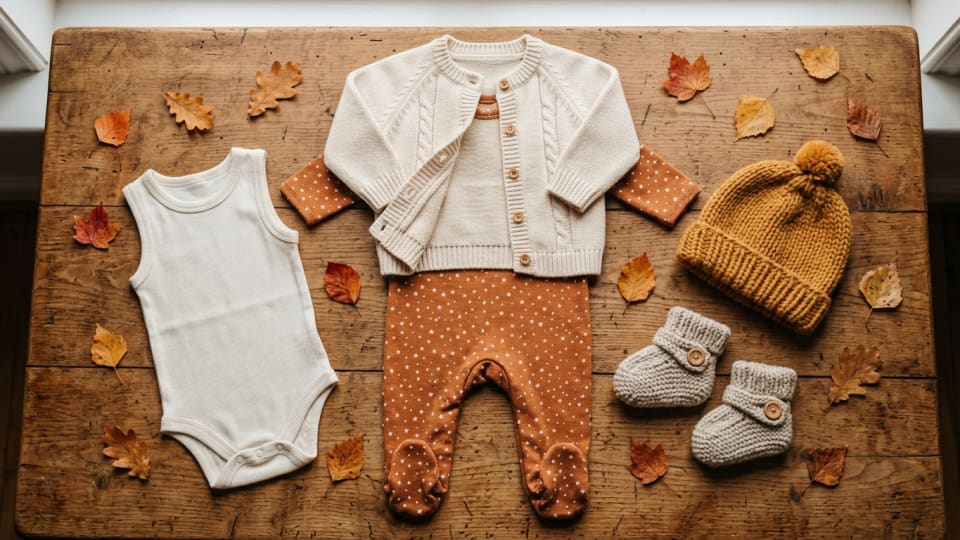
Base layer: A short or long-sleeved vest (bodysuit) worn closest to the skin. This is your foundation — it keeps warmth close to the body and stays tucked in neatly under everything else.
-
Mid layer: A babygrow, sleepsuit, or a soft top and leggings/trousers. This is your main outfit layer and does a lot of the temperature work.
-
Outer layer: A cardigan, light fleece, or jacket depending on conditions. For pram trips, a pramsuit or footmuff works brilliantly and can be loosened or opened when indoors.
On milder autumn afternoons, you might skip the outer layer entirely when indoors or find that just a vest and babygrow is perfectly comfortable. Trust what you’re observing in the moment.
How to Tell If Your Baby Is Too Warm or Too Cold
Here’s something that trips up almost every new parent: checking your baby’s hands to see if they’re warm enough. It feels logical, but it’s not actually a reliable guide. Babies’ hands and feet are often cool to the touch even when their core temperature is perfectly fine.
Instead, check your baby’s chest, neck, or the back of their neck. These areas give you a much more accurate sense of how your baby is actually feeling. If the skin there feels warm and comfortable, your baby is well dressed for the conditions. If it feels hot or clammy, they may be too warm. If it feels quite cold, they may need an extra layer.
Signs that your baby might be overheating include:
-
Flushed or red-looking skin
-
Sweating (especially around the hairline)
-
Rapid breathing
-
Feeling restless or unsettled
Signs they might be too cold include:
-
Pale or slightly mottled skin
-
Feeling cool to the touch at the chest or back of the neck
-
Unusual fussiness or difficulty settling
It’s worth noting that overheating is considered a greater risk than being slightly cool, so if you’re ever unsure, erring on the side of removing a layer and monitoring is a sensible approach.
The Best Fabrics for Irish Autumn Weather
Ireland’s autumn isn’t just changeable in temperature — it’s often damp too. That means fabric choice really does matter when it comes to keeping your baby comfortable throughout the day.
Cotton is your best friend for base and mid layers. It’s breathable, soft on delicate skin, and easy to wash — which, as any parent knows, is absolutely essential. Look for 100% cotton vests and babygrows for everyday wear.
Merino wool is a wonderful option for an extra layer or a hat. Unlike regular wool, merino is incredibly soft (no scratching or irritation) and has the added benefit of being naturally temperature-regulating — it keeps warmth in when it’s cool and doesn’t cause overheating when conditions change. It’s a bit of an investment, but many parents swear by it for the colder months.
Fleece works really well for outer layers and pram suits. It’s lightweight, warm, and dries quickly — ideal for Irish weather where a shower can appear from nowhere.
Try to avoid dressing your baby in synthetic fabrics directly against the skin, as these can trap moisture and cause irritation. Save those for outer, more protective layers if needed.
Autumn Wardrobe Staples Worth Having
If you’re putting together or refreshing your baby’s autumn wardrobe, here’s a practical list of what will genuinely earn its place:
-
Long-sleeved vests (multipacks) — the unsung hero of baby dressing, worn under everything
-
Babygrows with feet — cosy, easy, and no socks to lose
-
Soft cardigans (2–3) — easy to pop on and off, perfect for layering
-
A warm all-in-one pramsuit — invaluable for outdoor trips; look for one with zip access for quick nappy changes
-
A pram footmuff — takes the pressure off finding the right number of layers for pram trips and keeps baby snug without overheating indoors
-
Cotton hats — babies lose a lot of heat through their heads, so a soft hat for outdoor time is essential in autumn
-
Scratch mitts and booties — for younger babies especially, these add warmth without bulk
A Few Practical Tips for Out and About
When you’re heading out with the buggy or pram, remember to remove or loosen outer layers when you go indoors — into a shop, a café, or a friend’s home. Warm indoor environments combined with a heavy pramsuit can cause your baby to overheat quite quickly, and it’s easy to forget once you’re busy chatting or shopping.
If you’re using a baby carrier or sling, bear in mind that your own body heat adds significant warmth to your baby. A light layer is usually enough on top of your own clothing, even on cooler days. Carriers and slings are wonderfully warm and many parents find they need to dress baby in fewer layers when babywearing.
It’s also worth keeping a spare layer or two in your changing bag throughout autumn. A lightweight extra cardigan or spare vest takes up very little space and means you’re never caught short if the weather turns or your baby has a wardrobe mishap.
A Reassuring Word for New Mams
If you’re in those early weeks or months of parenthood and you find yourself second-guessing every outfit decision, please know that you are absolutely not alone. Temperature dressing is one of those things that feels complicated at first but quickly becomes intuitive as you get to know your baby’s cues and patterns.
You know your baby better than anyone. You’ll notice when they seem unsettled in ways that others might miss, and you’ll start to read their comfort signals without even thinking about it. The layering method gives you a flexible, forgiving framework — but ultimately, your own attentiveness and instincts are your greatest guide.
Take it one day at a time, keep a little cardigan in the bag, and enjoy those autumn walks. You’ve got this.