

How to help your child through the emotional leap to secondary school
The uniform is ordered, the schoolbag is picked out, and you’ve probably already spent more than you’d like on stationery. But if there’s a child in your house heading into first year this September, chances are the practical stuff isn’t the thing keeping either of you up at night.
The move from primary to secondary school is genuinely one of the biggest transitions a young person goes through. New building, new faces, new teachers for every subject, a locker they might not be able to open, and suddenly none of their old routines apply. For most kids, that’s a lot to hold. And yet so much of the conversation around this time tends to focus on logistics: the booklist, the bus, the timetable.
What doesn’t get talked about nearly enough is the emotional side of it.
What your child might be worried about but won’t say out loud
Irish youth mental health charity A Lust for Life — co-founded by Niall Breslin, better known as Bressie — has been thinking about exactly this. The charity, which focuses on early prevention education and mental health promotion for young people in Ireland, is preparing to launch Rising Minds, a new free junior cycle wellbeing programme for secondary schools, from September 2026.
Their message to parents heading into this back-to-school season is an important one: first-year nerves are normal, but they deserve to be taken seriously. Many young people heading into secondary school are quietly carrying worries about fitting in, making friends, being liked by teachers, or just not knowing what they’re doing. They may not articulate any of this directly. Sometimes it shows up as reluctance in the mornings, quietness at the dinner table, or a short fuse about things that seem unrelated.
Recognising those signals matters. Not to catastrophise, but to open the door.
What parents and schools can actually do
The good news is that the support doesn’t have to be complicated or intensive. A Lust for Life’s approach is rooted in prevention rather than crisis intervention — the idea being that if young people are given the tools to understand their own emotions, build resilience and feel genuinely connected to their school community, they’re far less likely to struggle in silence later on.
For parents, that can look like small but consistent things. Keeping the lines of communication open without pressuring a child to perform happiness. Letting them know their worries are valid without amplifying them. Helping them build confidence in their own ability to cope with something unfamiliar, rather than jumping in to fix every difficulty. It’s one of the trickiest balancing acts of parenting a preteen — you want to protect them, but you also want to trust them.
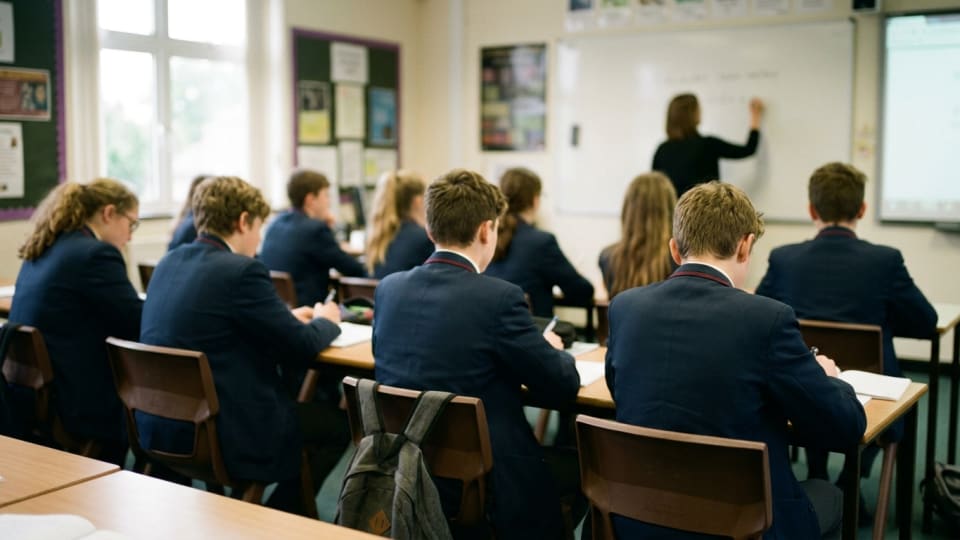
For schools, the focus is on creating classrooms where students feel psychologically safe. Where they can ask for help without embarrassment, admit confusion without shame, and feel like they belong before they’ve necessarily earned their place socially. That sense of belonging, especially in the first term, has a real impact on both wellbeing and academic success.
Why this moment matters more than we think
A Lust for Life is clear that this isn’t about turning classrooms into therapy rooms or treating normal developmental milestones as crises. The transition to secondary school is hard, but it’s also an opportunity. With the right support from home and school working together, first year can be the foundation on which a young person builds genuine self-awareness, emotional regulation and confidence — skills that carry them well beyond the Junior Cert.
The Rising Minds programme will be available free of charge to secondary schools from September 2026. If you’re a parent who’d like to see this kind of provision in your child’s new school, it’s worth raising with the school directly. And if you have a child who seems anxious about the move, even just naming it with them — acknowledging that it’s a big deal and that it’s okay to find it hard — can go a long way.
They don’t need everything to be perfect. They just need to know you’re paying attention.