

How to help your child sleep when it's bright outside
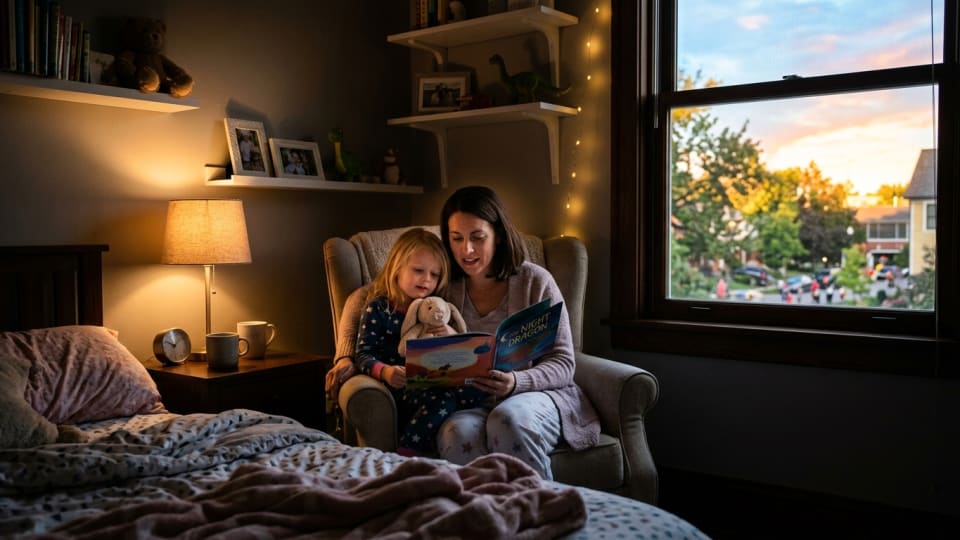
If you’re finding bedtime battles more challenging during the brighter months, you’re certainly not alone. Many parents discover that their usual evening routine falls apart when it’s still gloriously bright outside at 8 or 9pm. When children can hear other kids playing outside and see sunshine streaming through their windows, it’s completely natural for them to resist the idea that it’s time for sleep.
The good news is that with a few practical adjustments, you can help your child settle into a peaceful bedtime routine, regardless of what’s happening outside their window. Here’s how to navigate those bright summer evenings while keeping everyone’s sleep on track.
Create darkness in their bedroom
The most effective solution is often the simplest one: making your child’s room as dark as possible. Our bodies naturally produce melatonin when it gets dark, which helps us feel sleepy. When it’s still bright outside, this natural process gets disrupted.
Blackout curtains or blinds are your best friend during summer months. If you’re not ready to invest in new window coverings, blackout fabric can be attached to existing curtains with clips or velcro. Even a dark towel or blanket temporarily pinned over a window can make a significant difference.
For a budget-friendly option, black bin bags taped to windows work surprisingly well, though they’re not the most attractive solution. Some parents find that combining regular curtains with blackout blinds gives them flexibility – they can keep some light in during the day while ensuring complete darkness at bedtime.
Adjust your daily routine gradually
Rather than fighting against the natural light, consider whether your child’s bedtime needs a slight adjustment during summer months. Moving bedtime 30 minutes later might work better with both the natural light patterns and your family’s schedule.
If you do shift bedtime later, make sure to adjust the entire evening routine accordingly. Dinner, bath time, and quiet activities should all move later too, so your child still gets the same wind-down period before sleep.
Remember that what works in June might need tweaking again in August, as daylight hours gradually change throughout the summer. Be flexible and willing to adjust as needed.
Create a strong bedtime routine
When environmental cues like darkness aren’t available, your bedtime routine becomes even more important. A consistent series of calming activities helps signal to your child’s body and mind that sleep time is approaching, regardless of what’s happening outside.
Start your routine at the same time each evening, even if it feels early when the sun is shining. Include calming activities like a warm bath, quiet story time, or gentle music. The key is consistency – doing the same things in the same order helps your child’s body learn when it’s time to start winding down.
Consider adding a special “bedtime smell” like lavender pillow spray or a particular body lotion. These sensory cues can be particularly powerful when visual cues (like darkness) aren’t available.
Help them understand the importance of sleep
Children often respond well when they understand the “why” behind rules and routines. Explain to your child that their body needs sleep to grow strong and help their brain work well, even when it doesn’t feel like nighttime outside.
You might say something like: “Even though it looks like daytime outside, your body still needs its rest. Just like flowers need water even on cloudy days, your body needs sleep even when it’s bright outside.”
For older children, you could explain that different countries around the world have different amounts of daylight, and people everywhere still need to sleep at regular times to stay healthy and happy.
Manage the sounds of summer
It’s not just the light that can disrupt summer bedtime – it’s also the sounds. Children playing outside, lawn mowers running, and general neighbourhood activity can all signal to your child that it’s still “play time” rather than sleep time.
White noise machines, fans, or even a smartphone app with gentle sounds can help mask outdoor noises. Some families find that closing windows and using a fan for air circulation works better than leaving windows open during bedtime hours.
If your child is particularly sensitive to outside sounds, consider moving their bedtime routine to a quieter part of the house, then transferring them to their bedroom once they’re already sleepy.
Be patient with the adjustment period
Remember that it may take a week or two for your child to fully adjust to sleeping while it’s bright outside. This is completely normal, and consistency is key during this transition period.
If your child gets up and complains that it’s not nighttime, calmly remind them of the routine and guide them back to bed. Avoid getting into lengthy discussions about whether it’s really bedtime – instead, stick to simple, consistent responses.
Some parents find that a small clock or timer helps children understand when it’s time to stay in bed, regardless of the light outside. You might say, “When your clock shows 7, then it’s time to get up, even if it’s dark or light outside.”
Managing bedtime duringthe beautiful bright summer evenings doesn’t have to be a nightly battle. With the right environment, consistent routines, and a bit of patience, your child can learn to sleep peacefully regardless of what’s happening outside their window. Remember, this is a temporary seasonal challenge – you’re not changing their sleep forever, just helping them adapt to summer’s longer days.