

How to Exercise Safely During Pregnancy as the Weather Gets Cooler
When the temperature drops and the evenings get darker earlier, the sofa starts to look very appealing. And if you’re pregnant and feeling a little heavier, a little more tired, or a little less yourself — well, nobody could blame you for pulling on a blanket and calling it a day.
But here’s the reassuring truth: staying active during pregnancy as autumn and winter set in is not only safe for most mums-to-be, it can genuinely make a real difference to how you feel — physically and emotionally. A little movement, done gently and sensibly, can ease some of the aches and pains of pregnancy, support your energy levels, help with sleep, and even prepare your body for labour.
That said, cooler weather does bring its own considerations. From slippery paths to overheated yoga studios, it’s worth knowing what to look out for — and how to adapt your routine to suit both your changing body and the season.
Is It Safe to Exercise During Pregnancy?
For most healthy pregnancies, yes — exercise is not only safe but actively encouraged. The HSE recommends that pregnant women aim for around 150 minutes of moderate activity each week, spread across the week rather than all at once. That might look like a 20–30 minute walk most days, a prenatal yoga class twice a week, or a gentle swim a few times a week.
Of course, every pregnancy is different. If you have any complications — such as placenta praevia, a history of preterm labour, or a condition your consultant is monitoring — always check with your GP or midwife before starting or changing any exercise routine. They’ll give you guidance tailored to your own situation, and there’s absolutely no harm in asking.
If your pregnancy has been straightforward and your healthcare provider has given you the all-clear, then lacing up your runners or rolling out a yoga mat as the leaves fall is a very good idea.
Getting Outside: How to Move Safely in Cooler Weather
Walking is one of the best forms of exercise during pregnancy — low impact, free, and easy to fit around a busy day. And there’s no reason to stop just because the temperature has dipped. A brisk autumn walk can actually feel wonderful when you’re pregnant and tend to run warm.
The key is dressing well. Layering is your best friend in cooler months. Start with a breathable base layer close to the skin, add a warm mid layer, and top it with a wind and water-resistant jacket. As your bump grows, a maternity wrap or pregnancy support belt can be worn underneath to keep your middle warm and supported.
A few things to keep in mind when heading out in autumn or winter:
-
Watch out for wet leaves and icy paths. Your centre of gravity shifts during pregnancy, and your balance isn’t what it was. Stick to well-lit, even paths where possible and take your time.
-
Wear supportive footwear. Flat, grippy shoes or trainers are far safer than anything with a heel. Comfort matters more than style right now.
-
Keep it moderate. You should be able to hold a conversation while walking — if you’re too breathless to chat, ease back a little.
-
Don’t overdo it in the cold. Breathing in very cold air for extended periods can feel uncomfortable. Keep outdoor sessions to a manageable length and warm up gradually.
Moving It Indoors: Pregnancy-Friendly Options for Cooler Months
When the weather is simply too wet or cold to tempt you outside, moving indoors is a brilliant option — and there’s plenty to choose from.
Swimming and Aqua Aerobics
Many mums-to-be find swimming to be an absolute lifesaver during pregnancy. The water supports your growing bump beautifully, takes the pressure off your joints, and allows you to move in ways that can feel impossible on dry land. Aqua aerobics classes specifically designed for pregnant women are a great social option too — many leisure centres and pools across Ireland run them.
Just check that the pool is kept at a comfortable temperature — very warm pools can cause overheating, which is something to be mindful of during pregnancy.
Prenatal Yoga
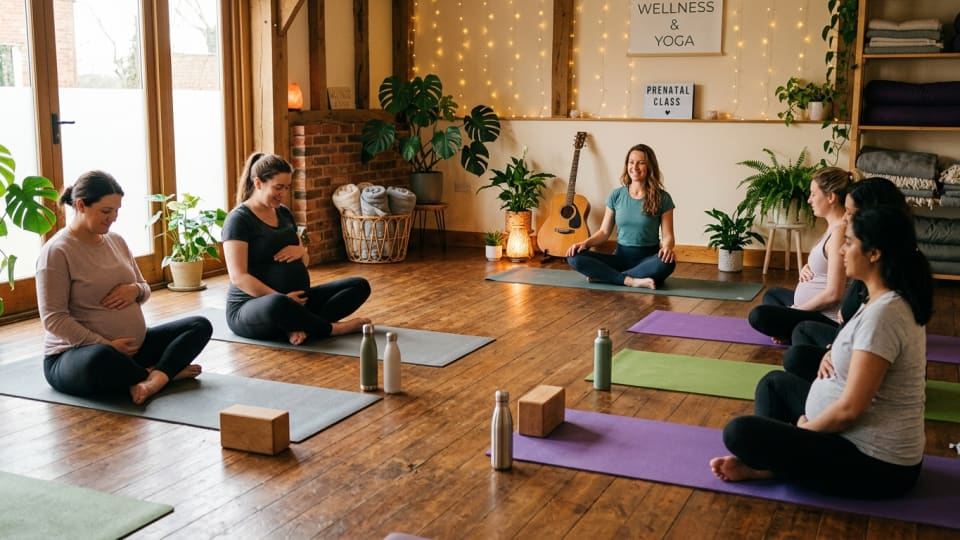
Prenatal yoga is one of the most popular choices for pregnant women, and for good reason. It focuses on breathing, gentle stretching, and strengthening the muscles that support your changing body — all while helping with stress and anxiety. Many classes run throughout pregnancy up to the final weeks, and the community aspect can be really comforting.
If you’re attending a heated yoga class (like hot yoga), it’s important to know that these are not recommended during pregnancy. The elevated temperature can cause your core body temperature to rise too much, which isn’t safe for you or baby. Stick to standard temperature studios and let the instructor know you’re pregnant so they can offer modifications.
Gentle Strength and Stability Work
Gentle resistance exercises — using light weights, resistance bands, or just your bodyweight — can be really beneficial during pregnancy. Strengthening your glutes, back, and core (in a pregnancy-safe way) can help with the posture changes and lower back pain that many mums experience as their bump grows.
There are plenty of pregnancy-specific workout videos available online if you prefer to exercise at home. Look for content from qualified prenatal fitness instructors, and always avoid exercises that involve lying flat on your back for extended periods after the first trimester.
Pilates
Pregnancy pilates is another wonderful option — it focuses on posture, breathing, pelvic floor strength, and core stability. Many physiotherapists and women’s health specialists in Ireland recommend it throughout pregnancy and into the postnatal period. Look for classes specifically designed for pregnancy rather than adapting a regular class on your own.
Signs to Stop and Seek Advice
Knowing when to pause is just as important as knowing when to move. Stop exercising and contact your midwife or GP if you experience any of the following:
-
Chest pain or difficulty breathing
-
Dizziness or feeling faint
-
Vaginal bleeding or unusual discharge
-
Painful uterine contractions
-
Swelling, pain, or redness in your calf
-
Reduced movements from your baby
These aren’t reasons to be afraid of exercise — they’re simply worth being aware of so you can look after yourself with confidence.
A Gentle Reminder: Any Movement Counts
It’s easy to feel like you’re not doing enough, especially if your pre-pregnancy routine has had to change. But please know: a 15-minute walk around the block is enough. Choosing the stairs. A gentle stretch before bed. It all counts, and it all matters.
Many parents find that pregnancy is the time they become most in tune with their body — listening to what it needs, resting when rest is called for, and celebrating the small things. If some days the couch wins, that’s completely fine too. Growing a baby is enough of a workout on its own.
As the autumn sets in, try to find a rhythm that feels right for you — whether that’s a layered stroll through the park, a warm pool, or a candlelit prenatal yoga class. Your body and your baby will thank you for it, whatever that looks like on any given day.