
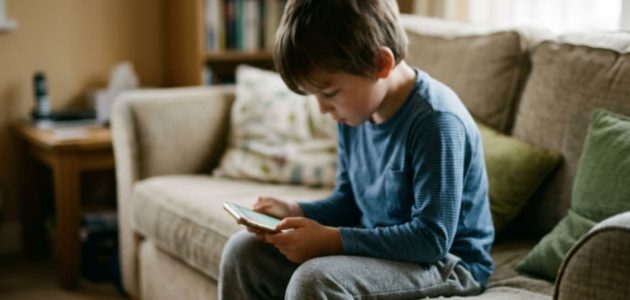
CyberSafeKids Report Finds Little Has Changed for Children Online Despite New Laws
If you’ve ever had that sinking feeling watching your nine-year-old navigate Roblox or wondered exactly what your twelve-year-old is doing on Snapchat, a major new report published today will do little to settle your nerves — but it will make you feel significantly less alone.
CyberSafeKids, Ireland’s national voice for children’s online safety, has released its tenth annual report, and the title says it all: ‘The Year Little Changed’. Based on surveys of over 7,000 children during the 2025–26 academic year, it paints a sobering picture of where Irish children are spending their time online, what they’re encountering there, and how ill-equipped the current regulatory landscape is to protect them.
Seven in ten primary school children still have social media accounts
Despite legal age assurance obligations that came into effect in July 2025 — designed specifically to stop underage children accessing social media platforms — 70% of 8–12-year-olds still have their own accounts on apps that require users to be 13 or older. That figure hasn’t budged. Not even slightly.
For the 12–15 age group, the numbers are even starker: 99% use social media apps. WhatsApp is the most popular (85%), followed by YouTube (80%), Snapchat (78%), TikTok (72%) and Instagram (48%). And roughly a quarter of all children aged 8–15 report being ‘bothered’ by some form of contact or content online — a figure that, again, is unchanged from last year.
What has changed, and not for the better, is the nature of what children are being exposed to. There’s been a significant jump in 12–15-year-olds encountering sexual content online: 24% this year, up from 10% last year. Critically, the vast majority of that content — 22% — was pushed to them algorithmically rather than sought out. That’s not curiosity. That’s a design failure.
Exposure to scams and misinformation is also on the rise, with 36% of 8–12-year-olds and 41% of 12–15-year-olds reporting encounters with bad or fake information online this year.
Roblox, AI and the gaps regulation isn’t filling
Roblox continues to dominate younger children’s online lives — 68% of 8–12-year-olds use it, making it the most popular platform for this age group for the second year running. But of the children who reported negative online experiences, 58% named Roblox as the place where they happened. Changes made by the platform earlier this year, the report notes, don’t go nearly far enough. And because gaming platforms aren’t in the highest-risk regulatory tier under EU rules, there’s a significant gap between where children actually are online and where the regulation is focused.
Then there’s AI. If social media felt like it crept up on parents, generative AI has arrived at a sprint. 55% of 8–12-year-olds and 76% of 12–15-year-olds in Ireland are now using AI tools — a jump so sharp it’s described in the report as explosive growth. Older children tend to use it for tasks: looking up information (75%) or schoolwork (27%). Younger children use it more for fun — asking random questions, experimenting with what it can do.
But here’s the part that should stop you mid-scroll: 16% of 8–12-year-olds and 20% of 12–15-year-olds are using AI to chat or get advice. Around 1 in 10 children finds it easier to talk to an AI than to people they actually know. And despite all of this, 50% of younger children and 45% of older ones say no one has ever spoken to them about AI at all.
CyberSafeKids CEO Alex Cooney didn’t hold back: “After a raft of new legislation in Ireland and at EU level in 2025, we had real expectations of change but this report shows those expectations haven’t been met. We flagged concerns last year about children’s access to AI chatbots and the absence of regulation for this powerful new technology. A year on, little has changed on regulation, while children’s access has grown exponentially, without safeguards or protections. The intense debate over banning under-16s from social media is missing the point. We’re arguing over whether to lock the door while the laws already meant to protect children inside go unenforced.”
It’s not just about individual families
One of the most quietly important findings in the report is the role socio-economic factors play. When the data is broken down using the Department of Education’s DEIS model, 62% of 8–12-year-olds in DEIS primary schools own a smartphone — more than twice the rate seen in non-DEIS schools, where that figure is 29%. Use of TikTok and Snapchat among DEIS pupils is also significantly higher than among their non-DEIS peers.
This matters because it shows that the growing movement among parents to delay smartphone and social media access — however well-intentioned — isn’t reaching every community equally. As the report puts it, the burden of creating solutions cannot fall on parents alone. Real, universal protection has to be guaranteed by design and by legislation.
Peter Mooney, Principal of Dominican Primary School in Dún Laoghaire, described what children in the report have disclosed: “It’s a sad reminder of the kind of harmful material young children are encountering online — highly negative, disturbing, violent, and inappropriate content along with unwanted contact, even in gaming environments believed to be safe. Most worryingly, almost a quarter of primary school-aged children who had a distressing online experience kept it to themselves, telling no one.”
That last detail is worth sitting with. Not telling anyone. Not a parent, not a teacher, nobody.
CyberSafeKids is calling for a range of actions including blocking minors’ access to online pornography as required under existing EU law, funding for parent and caregiver support initiatives, and an amendment to the Digital Services Act that would set 16 as the default minimum age for digital products designed for children.
The full report is available to read at www.cybersafekids.ie/report2026.