
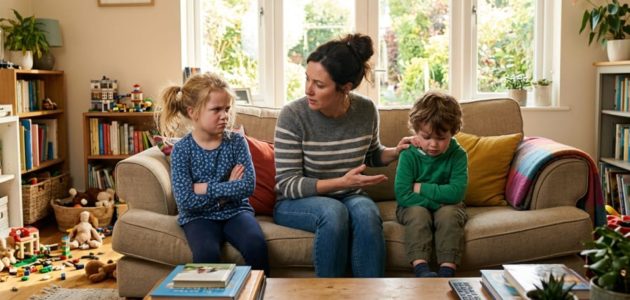
5 ways to handle sibling arguments when everyone's stuck at home
If you’re finding that your little ones seem to bicker more when everyone’s home together, you’re not alone. Whether it’s school holidays, remote work days, or just those long weekends, many parents notice that sibling squabbles seem to multiply when the family’s cooped up indoors.
The good news? There are practical strategies that can help restore some peace to your home while teaching your children valuable conflict resolution skills they’ll use for life.
1. Create designated spaces for each child
When children are sharing space more than usual, territory disputes become common. Set up small personal zones where each child can retreat when they need alone time – this might be a corner of their bedroom, a reading nook, or even just their own special cushion in the sitting room.
Make it clear that when someone’s in their designated space, they’re not to be disturbed unless it’s an emergency. This gives children a sense of ownership and control, which often reduces the need to assert dominance through arguments.
Consider using a simple timer system where each child gets uninterrupted time in shared spaces like the playroom. Even 20-minute slots can make a significant difference to household harmony.
2. Establish clear routines and expectations
When normal routines are disrupted, children often feel unsettled, which can lead to more friction between siblings. Create a loose but consistent daily structure that includes both together time and apart time.
Post a simple visual schedule somewhere visible – this helps children know what to expect and reduces the “but I want to do that now” arguments. Include regular meal times, quiet periods, and designated play sessions.
Set clear ground rules for disagreements before they happen. For example: “In our house, we use words, not hands” or “Everyone gets a turn to speak without interruption.” Having these boundaries established ahead of time gives you something concrete to refer back to during conflicts.
3. Teach the “STOP, LISTEN, SOLVE” method
Give your children a simple framework they can use to resolve disagreements independently. The three-step approach works well for most school-age children:
STOP: When voices start getting raised, everyone takes three deep breaths.
LISTEN: Each person gets 30 seconds to explain their side without interruption.
SOLVE: Together, they brainstorm one solution that works for everyone.
Practice this method during calm moments, perhaps using hypothetical scenarios or past conflicts as examples. Children need to learn these skills when they’re not emotionally activated.
If they can’t reach a solution, that’s when they involve you – but make it clear you’ll be helping them problem-solve, not simply deciding who’s right or wrong.
4. Plan engaging activities that promote cooperation
Prevention is often easier than intervention. When children are engaged in meaningful activities, they’re less likely to wind each other up out of boredom.
Look for activities that naturally require teamwork: building a blanket fort together, preparing a special snack, or working on a family puzzle. These shared goals give siblings a reason to cooperate rather than compete.
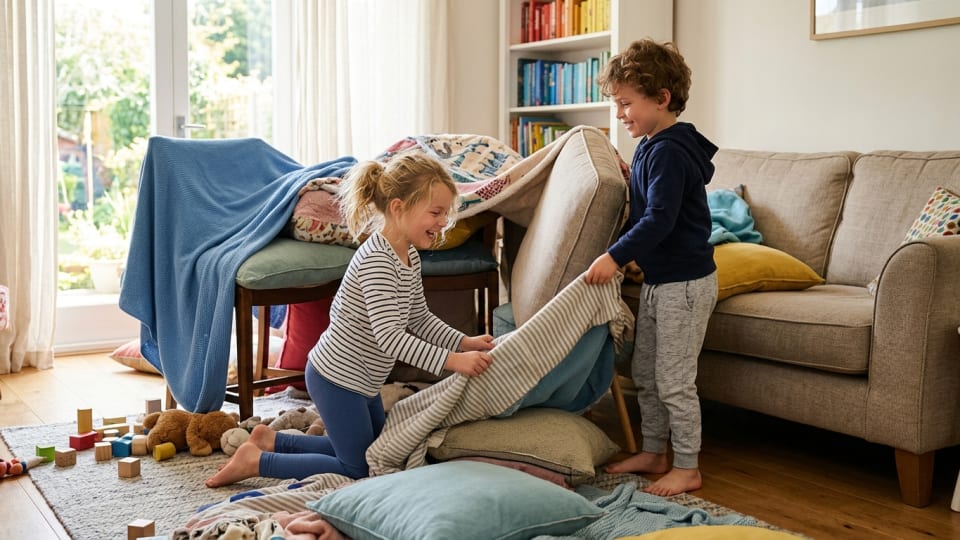
Consider implementing “special sibling time” where the children choose an activity to do together without adult involvement. Even 15 minutes of positive interaction can shift the dynamic for the rest of the day.
Outdoor time, when possible, can work wonders too. Fresh air and physical activity often naturally reduce tension and provide a healthy outlet for energy that might otherwise fuel arguments.
5. Stay calm and model good conflict resolution
Perhaps the most important strategy is managing your own response to sibling conflicts. When parents react with frustration or immediately jump in to solve every disagreement, children don’t learn to handle conflicts themselves.
Take a deep breath before intervening. Ask yourself: “Is anyone in danger?” If not, you might wait a moment to see if they can work it out themselves. Many arguments fizzle out naturally when children don’t have an adult audience.
When you do need to step in, model the behaviour you want to see. Use a calm voice, acknowledge both children’s feelings, and guide them toward a solution rather than imposing one.
Remember that some level of sibling conflict is completely normal and even healthy – it’s how children learn to navigate relationships, stand up for themselves, and compromise with others.
Taking care of yourself too
Managing increased sibling squabbles can be draining for parents. Make sure you’re building in small breaks for yourself throughout the day, even if it’s just five minutes with a cup of tea while the children have quiet time.
Remember that this phase – whether it’s holidays, illness recovery, or unusual circumstances keeping everyone home – is temporary. You’re not failing as a parent if your children argue more when they’re together constantly. You’re simply human, raising human children who are still learning how to navigate relationships.
With patience, consistency, and these practical strategies, you can help your family develop better conflict resolution skills while maintaining your own sanity during those intense “everyone’s home” periods.