

5 Simple Ways to Help Your Child Feel Calm on Their First Day Back
There’s something about that first morning back at school — the freshly ironed uniform, the oversized bag, the little hand gripping yours just a little tighter than usual. Whether your child is starting school for the very first time or returning after a long summer, first-day nerves are completely normal. And honestly? So are the feelings you’re having on the footpath outside those gates.
The good news is that there are a few simple, tried-and-tested things you can do in the days leading up to — and on the morning of — that big first day to help your little one feel a bit more settled and a lot more ready. Nothing complicated, nothing that requires a plan printed in triplicate. Just small, thoughtful things that make a real difference.
Here are five gentle strategies that many Irish mams and dads find really helpful.
1. Walk the Route Together Beforehand
Familiarity is incredibly reassuring for children. If at all possible, take a walk or drive past the school in the days before term starts. If it’s a new school, see if you can peek through the gates or walk around the outside. Point out where you’ll drop them off, where you’ll be waiting at home time, and what landmarks they’ll pass along the way.
This “practice run” helps remove some of the unknown from the morning, which is often where the anxiety lives. When everything feels a little more familiar, children tend to feel a little more confident stepping through those doors.
You might even make it a fun outing — grab a little treat on the way home and talk about what they’re looking forward to, even if it’s something small like the lunch break or a friend they’ll see again.
2. Build a Calm, Consistent Morning Routine
Rushed mornings are tough on everyone, but they can be especially overwhelming for an already-anxious child. A predictable routine in the days before school starts — and on the morning itself — gives children a sense of control and security when everything else feels a bit uncertain.
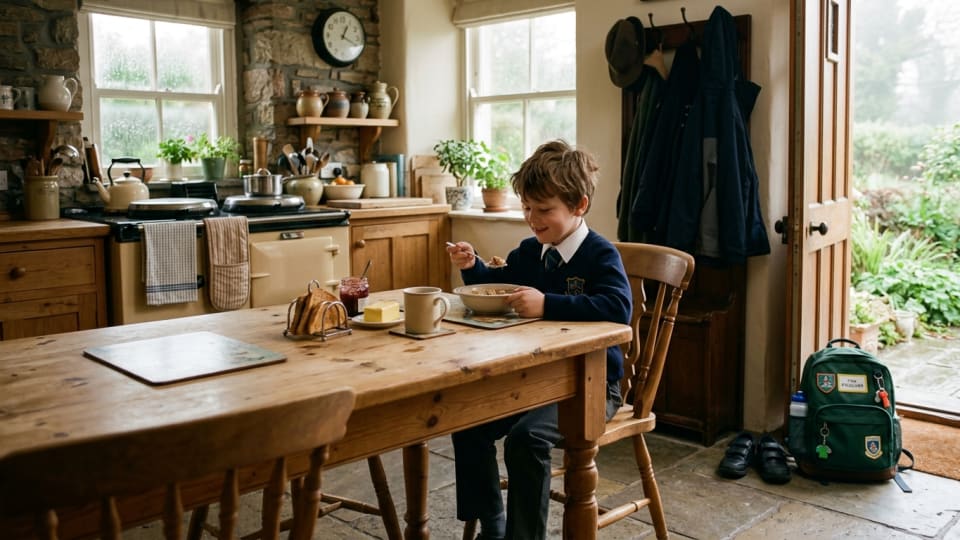
Try to get the practical bits sorted the night before: uniform laid out, bag packed, lunchbox ready. That way, the morning itself can be as calm and unhurried as possible. A bit of breathing room for a proper breakfast, maybe some gentle chat or a favourite song on the radio, can set the whole day off on the right foot.
If your child knows what to expect each step of the morning, there’s less room for worry to creep in — and more room for them to feel ready.
3. Talk Openly About How They’re Feeling
It might be tempting to brush off nerves with a cheerful “Ah, you’ll be grand!” — and sometimes that works a treat. But for many children, having their feelings acknowledged first can make all the difference.
Try sitting down together and asking open questions: “Are you feeling a bit nervous about tomorrow?” or “Is there anything you’re wondering about?” Let them talk, even if what comes out seems small or a little silly. To them, it’s very real.
You can gently normalise their feelings by sharing that lots of children feel the same way, and that even grown-ups get nervous about new things sometimes. Then, if they’re open to it, you can move into problem-solving together — who might they sit with at lunch? What’s one thing they’re looking forward to?
Children who feel heard tend to feel much less alone in their worries — and that in itself is enormously comforting.
4. Create a Little Goodbye Ritual
A goodbye ritual might sound like a small thing, but it can be a genuinely powerful anchor for an anxious child. It doesn’t need to be elaborate — it just needs to be yours.
Some families do a special handshake, a particular squeeze, or a little phrase they say to each other every single morning. Something like “See you at three, and I love you to the moon” or whatever feels natural for your family. The key is consistency — doing it the same way each time so your child knows exactly what to expect, and knows that you’ll be there when it’s done.
Try to keep the goodbye itself warm but brief. Lingering at the door, however understandable, can sometimes make the separation harder. A confident, loving send-off — even if you shed a quiet tear once you’ve turned the corner — gives your child permission to walk in and get on with their day.
5. Remind Them — and Yourself — That It Gets Easier
Most children settle much faster than we expect. By mid-morning, many are deep into a game, a worksheet, or a conversation with a pal — and the nerves of the morning feel a long way away. That’s not always easy to believe when you’re standing at the gate watching a wobbling lip, but it’s true more often than not.
Remind your child gently that feelings of nervousness usually fade once you get going, and that by the end of the day, they’ll have stories to tell. And remind yourself of the same thing too — because this is hard for mams as well, and it’s okay to feel that.
Each day that passes builds a little more confidence, a little more familiarity, a little more belonging. Before you know it, they’ll be racing ahead of you through those gates without a backward glance — which is exactly as it should be, even when it tugs at the heart.
A Final Word
First-day nerves are a sign that your child cares, that they’re tuned in to the world around them, and that big things feel big to them — which is completely as it should be. Your calm, steady presence and a few simple strategies can go a long way towards helping them feel brave enough to take that step.
You’ve got this. And so have they.