
5 Simple Ways to Build Your Toddler's Independence Before Preschool Starts
There’s something wonderfully bittersweet about watching your little one inch closer to that first day of preschool. One moment they seem so tiny, and the next they’re almost ready to walk through a classroom door on their own. It’s exciting, nerve-wracking, and more than a little emotional — often for the grown-ups more than the children!
The good news is that there’s plenty you can do in the weeks and months before preschool starts to help your toddler feel confident and capable when the big day arrives. And the best part? It doesn’t need to feel like homework or formal teaching. Building independence in toddlers is mostly about giving them small opportunities to do things for themselves — and cheering them on as they go.
Here are five simple, practical ways to get started at home.
1. Let Them Have a Go at Getting Dressed
Self-dressing is one of the skills preschool staff most appreciate children having some experience with — even if it’s just the basics. Pulling up trousers, managing a zip, or taking off and putting on a cardigan are all small wins that add up to big confidence in a classroom setting.
Start by choosing clothes that are easy to manage: elasticated waistbands, Velcro fastenings, and slip-on tops all help. Give your toddler a little extra time in the morning to have a go themselves before you step in. It might feel slower at first, but the pride on their face when they manage it on their own is absolutely worth it.
If they find something tricky, try breaking it into steps — “first we put one arm in, then the other” — rather than taking over completely. Encouragement goes a long, long way at this age.
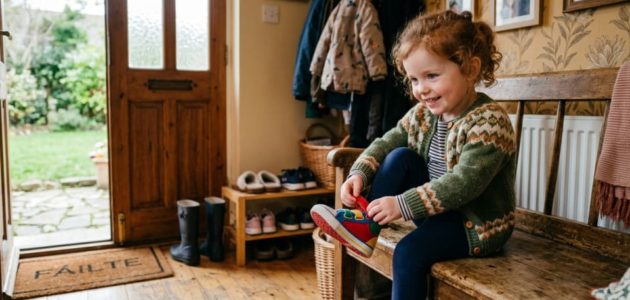
2. Practise Putting On and Taking Off Shoes
Shoes are a daily preschool reality. Between outdoor play, indoor slippers, and PE time, little ones may need to take their shoes on and off several times throughout the day. Preschool staff are wonderfully patient, but having some practice at home really does help your child feel more settled and self-sufficient.
Velcro shoes are ideal for this age group — save the lace-up styles for a little later. Set aside a few minutes each day to let your toddler practise, and try to make it playful rather than pressured. A little rhyme or a countdown can turn a frustrating moment into a fun one.
3. Encourage Simple Tidying Up
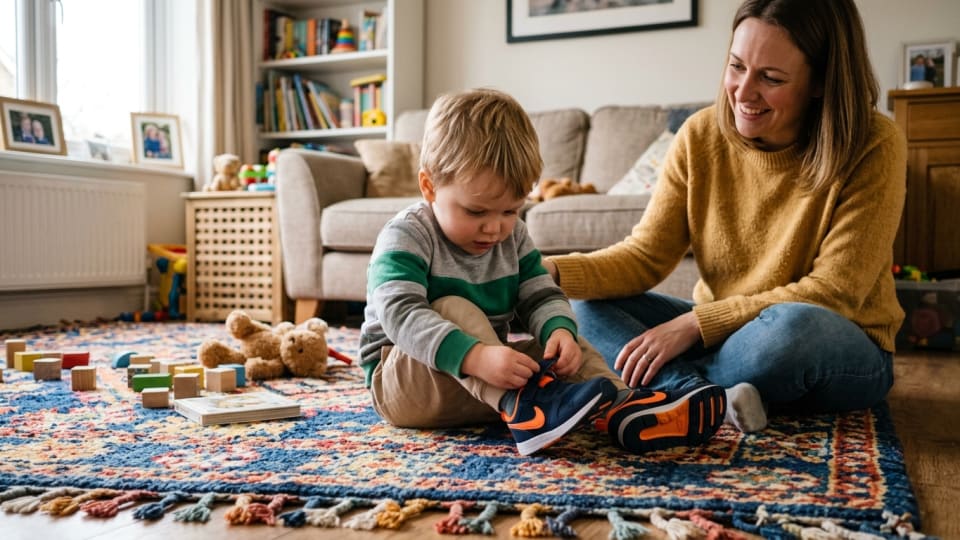
Preschools typically have a tidy-up time built into the day, and children who’ve had a little practice at home tend to find this transition much easier. It’s not about having a spotless playroom — it’s about understanding that toys have a place and that putting them away is just part of the routine.
Start small. A simple tidy-up basket, a shelf for books, or a box for building blocks gives your toddler a clear and achievable goal. Tidy-up time works best when it’s made into a habit rather than a chore, so try singing a little song while you do it together, or make it a race against the clock.
Joining in alongside your toddler — rather than directing from across the room — also models the behaviour in a really natural way. You’re showing them what it looks like, not just telling them what to do.
4. Support Bathroom Independence
If your toddler is toilet trained, helping them feel comfortable managing the bathroom routine on their own is a really important step before preschool begins. This includes being able to pull clothing up and down, wash and dry their hands, and let an adult know if they need help.
Practise at home by encouraging your child to manage as much as they can independently, while making clear that it’s always okay to ask for help. Many parents find it useful to talk openly about what happens at preschool — reassuring their child that teachers are there to help and that asking is absolutely fine.
If your little one is still working on toilet training, it’s worth speaking with your chosen preschool before the start date. Most settings are well used to supporting children at different stages, and knowing what to expect will put both of you at ease.
5. Build a Simple Routine at Home
Toddlers thrive on predictability. A consistent daily routine — even a relaxed one — helps children feel secure and teaches them to move between activities with greater ease. This is exactly the kind of rhythm they’ll experience in a preschool setting, so getting used to it at home is a lovely head start.
You don’t need a rigid timetable. Something as simple as: wake up, get dressed, have breakfast, play, tidy up, lunch — done in roughly the same order each day — gives your toddler a sense of what comes next. When children can anticipate what’s happening, they tend to feel calmer and more confident.
Visual routine charts can be a brilliant help at this age too. Simple pictures showing each part of the morning (a picture of a toothbrush, then shoes, then a lunchbox) give your toddler something to follow on their own, which builds both independence and a lovely sense of achievement.
Remember: Every Child Gets There in Their Own Time
It’s worth saying — gently but clearly — that not every child will have all of these skills perfectly in place by the time preschool begins, and that is completely okay. Preschool teachers are trained and experienced in supporting children at all different stages of development. Your child won’t be the only one who needs a hand with their shoes or a reminder about hand-washing.
What matters most is that your little one feels loved, encouraged, and safe enough to try. The confidence they carry into that preschool room is built right there at home, in the small everyday moments when you step back just enough to let them have a go.
You’re already doing a brilliant job. And they’re going to be just fine.